7 Things You Didn't Know About How Liquidation Discounts Actually Work

Most people assume that a deeply discounted price tag means something is wrong with the product. That assumption is mostly wrong, and understanding why can save you a lot of money over the course of a year.

Liquidation is not a clearance sale. It is not the same as a store just marking things down 20% to move seasonal stock. Real liquidation happens when a product exits the normal retail supply chain entirely, usually because of overproduction, a retailer going under, a cancelled wholesale order, or returned merchandise that cannot go back on a standard shelf. At that point, the manufacturer or retailer has one goal: recover whatever money they can before that inventory becomes a total write-off. That recovery process is what feeds every discount liquidation store, bargain store, closeout store, and surplus store you've ever walked into. And the deals are real, not manufactured.
1. Liquidation Is a Financial Recovery Tool, Not a Charity Discount
Here is something that reframes the whole conversation: when a big retailer liquidates inventory, they are not doing you a favor. They are doing themselves a favor. A pallet of unsold electronics sitting in a warehouse costs money every single day in storage fees, insurance, and carrying costs on the original purchase. Selling that pallet at 30 cents on the dollar is not a loss. It is a financial decision that recovers partial value instead of zero value, and it frees up warehouse space for products that will actually sell at full price.
Retailers and manufacturers have been doing this for decades. Department stores, big-box chains, even online giants all feed inventory into the liquidation pipeline when products don't move fast enough. Retailer bankruptcies are one of the bigger triggers, when a chain closes, all that remaining stock has to go somewhere, and it typically goes through a liquidation wholesaler who buys it in bulk. Cancelled orders are another major source, especially in apparel and consumer goods where a buyer might cancel a purchase order six months before the holidays and leave a manufacturer holding thousands of units they never expected to own for long.
Seasonal overstock is probably the most predictable source. Every year, retailers order more holiday inventory than they need because the cost of running out is worse than the cost of having too much. After the season ends, that excess has to move. Rather than hold it for twelve months, they sell it off. That stuff ends up at an overstock store near you, sometimes still in original packaging, at prices that look almost suspicious until you understand why they're that low.

2. The Supply Chain Has More Steps Than You'd Expect
A liquidated item does not go directly from a big retailer's warehouse to the bargain store shelf. There are usually several stops in between, and each one affects the final price you pay.
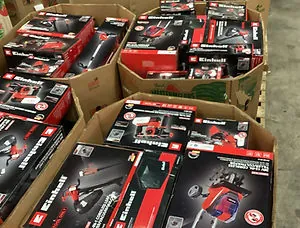
Step one is the original retailer or manufacturer deciding to liquidate. They might sell directly to a large liquidation wholesaler, or they might list pallets on one of several online auction platforms that specialize in this kind of bulk merchandise. Companies like B-Stock, Direct Liquidation, and several others run these auctions, and buyers on those platforms are typically businesses, not individual shoppers. They buy by the pallet or by the truckload.
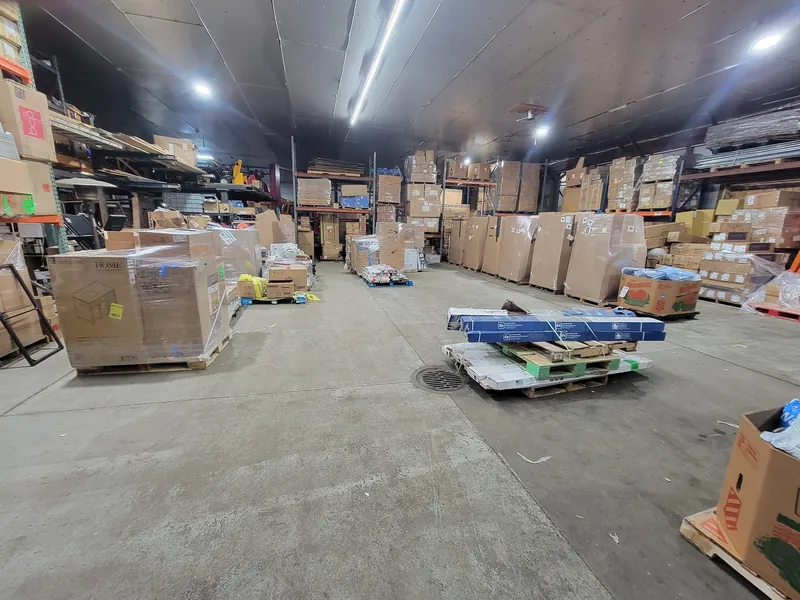
Step two is the bulk buyer, usually a closeout store or overstock store operator, who acquires those pallets and then sorts, grades, and prices the merchandise individually. This is where a lot of the work actually happens. Sorting a mixed pallet of customer returns takes real labor. Some items are fine. Some need minor cleaning. A few might be missing parts. Each one gets evaluated before it hits the floor. That sorting cost is built into the pricing, which is why a surplus store charges a bit more per unit than the raw auction price but still way less than retail.
Step three is you, walking in and buying one item at a time. By the time you're holding a $40 power drill that originally retailed for $130, that item has passed through at least two businesses and probably been evaluated by at least one person who decided it was worth reselling. That is not a random deal. It is a deliberate chain of decisions that makes the price possible.
When a liquidation wholesaler pays $800 for a pallet of 50 mixed items, the average cost per unit is $16. Even after sorting, labor, and overhead, a good discount retail store can price those items at $25–$60 each and still offer shoppers a 50–70% discount off original retail prices. The math works because the entry cost is so low.
3. Not All Liquidation Merchandise Is the Same, and the Category Changes Everything
Customer returns are probably the most misunderstood category in the whole liquidation world. People assume "returned item" means "broken item." Sometimes that's true. But a huge percentage of retail returns are products that were opened, used once or twice, and returned simply because the buyer changed their mind or found something they liked better. Stores cannot resell those as new. So they go into the returns stream, and eventually they end up at a discount liquidation store at 40–70% off the original price, often in perfectly working condition.
Shelf pulls are a different situation entirely. These are items that were on a retail shelf but got pulled to make room for new inventory, newer models, or a store reset. They may have light shelf wear, a bent corner on the packaging, or a small sticker on the box. The product inside is usually untouched. Shelf pulls tend to carry some of the best discount-to-condition ratios you can find anywhere.
Refurbished goods are more involved. These have been inspected, repaired if needed, and tested before resale. They typically carry some kind of limited warranty or at least a clear condition disclosure. Electronics and appliances show up in this category a lot. Discontinued product lines are another common source of genuinely good deals, perfectly functional items that a brand simply stopped making, so they have no future retail value and get moved out fast.
Discount ranges vary a lot by category and condition. Here is a rough guide to what shoppers typically see at a legitimate surplus store or closeout store:
- Shelf pulls (apparel, home goods): 30–50% off retail
- Overstock/surplus (new, in box): 20–45% off retail
- Customer returns (tested, working): 40–70% off retail
- Refurbished electronics: 35–60% off retail
- Discontinued items: 50–80% off retail, sometimes more
Condition grading matters more than most shoppers realize. Common terms you'll see include "Grade A" (like new or barely used), "Grade B" (visible wear but fully functional), "Grade C" (cosmetic damage, possibly missing accessories), and "salvage" (for parts or repair only). Always ask what a store's grading standards actually mean before buying, because these terms are not standardized across the industry.
4. Industry Numbers Tell a Story That Should Change How You Shop
U.S. retail returns hit somewhere in the range of $750 billion per year according to recent industry estimates. To put that in perspective, that is not a niche market. That is a massive parallel economy built entirely on merchandise that could not stay in the original retail channel. That volume is what keeps every bargain store, discount outlet store, and buy liquidation items business stocked and open.
Our directory currently lists 211 liquidation-related businesses, which honestly represents just a slice of what is actually operating across the country. Those 211 businesses carry an average customer rating of 4.4 stars out of 5. That number is worth sitting with for a second, because it is higher than the average rating for most retail categories we track. People who shop at these places tend to keep coming back and rate them well. That is not an accident.
| Business Name | Location | Rating | Reviews |
|---|---|---|---|
| A&R Legendary Sales - Pallet Liquidation | Delta, OH | 5.0 ★ | 114 |
| Woocky Wholesale | Omaha, NE | 5.0 ★ | 60 |
| Ohio Wholesale Liquidation Services | Columbus, OH | 5.0 ★ | 34 |
| Peak Stack Wholesale | Round Rock, TX | 5.0 ★ | 23 |
| Haus Origins Furniture Liquidation Outlet | Vineyard, UT | 5.0 ★ | 22 |
Geographically, the directory shows that liquidation stores are not just a big-city thing. Top cities in our listings include Vicksburg, Columbus, Mooresville, Las Vegas, and Indianapolis, each with 2 listings. That spread across mid-sized Midwestern markets, a Southern city, and a major metro like Las Vegas tells you that demand for this kind of retail is pretty much everywhere, not concentrated in any one region. A&R Legendary Sales in Delta, Ohio of all places, with 114 reviews and a perfect 5-star average, is proof that the best stores in this category can be in towns most people have never heard of. Small market, enormous reputation.
If you're also trying to cut costs on food, salvage grocery options in your area work on a similar model and are worth looking into alongside liquidation retail for your broader budget strategy.
5. Electronics and Home Goods Are Where the Deals Get Interesting
Not every product category shows up at a discount liquidation store in equal numbers. Electronics, home goods, tools, and apparel dominate for a reason: these are the categories where large retailers carry the most inventory volume, and therefore generate the most excess and returns.
Electronics are particularly interesting because consumer tech has a very short shelf life. A laptop model that was top-tier eighteen months ago gets replaced by a new version, and suddenly the older model has no place in a full-price retail environment. But it still works perfectly. A discount retail store that picks up a pallet of those laptops can offer genuinely good value on hardware that is maybe one generation old but has years of useful life left.
Tools are similar. Brand-name power tools from manufacturers like Milwaukee, DeWalt, and Ryobi show up in liquidation channels regularly, usually as customer returns or shelf pulls. A cordless drill that retailed for $180 can show up at a surplus store for $55–$75 in working condition. That is not a trick. It is just supply chain math working in the shopper's favor for once.
Home goods and furniture are where it gets a bit more unpredictable. Haus Origins Furniture Liquidation Outlet in Vineyard, Utah carries a perfect 5-star rating across 22 reviews, which suggests that furniture liquidation, done right, can produce genuinely happy customers. Furniture is tricky to liquidate because it is bulky and hard to transport, but that friction actually helps the buyer because fewer resellers want to deal with it, which keeps prices lower.
When buying electronics at a closeout store or overstock store, always ask whether the item has been tested and what the return policy is. Reputable stores will tell you clearly. If a store cannot answer either question, that is useful information about the store itself.
6. How to Actually Find a Good Store Near You (Not Just Any Store)
Searching "liquidation sales near me" online will get you somewhere, but not always to the best options. Google results skew toward whoever has invested in local SEO, and that is not always the same as whoever runs the best store. A few better approaches:
First, use a dedicated directory rather than a general search engine. A business directory focused on this category, like this one, filters out the noise and shows you stores that have been reviewed by real customers who specifically came to buy liquidation items. Ratings across 211 listings averaging 4.4 stars suggests a healthy baseline quality, and the outliers at 5.0 stars with 50+ reviews are genuinely worth seeking out.
Second, pay attention to review volume, not just rating. A store with 4.7 stars from 8 reviews is less informative than a store with 4.4 stars from 200 reviews. Woocky Wholesale in Omaha has 60 reviews at 5.0 stars, that is a meaningful sample size. It tells you the consistency is real, not a one-time lucky visit from a handful of customers.
Third, visit in person before committing to a big purchase. Walk the floor. Notice how merchandise is organized and labeled. Stores that sort and display product carefully tend to know what they have and price it accurately. Stores where everything is in unmarked bins with no condition information are higher-risk, and sometimes that is fine if prices reflect the risk, but you should go in with eyes open.
One more thing that is easy to overlook: ask about restocking schedules. Good surplus stores and discount outlet stores get new pallets on regular cycles, and if you know when fresh inventory hits the floor, you can be there early when selection is best. A lot of regular customers at these places treat it almost like a sport. They know the restock days, they arrive early, and they score the best items before anyone else gets a look. That kind of insider knowledge is worth asking for directly.
7. The Secondhand Economy Is Bigger Than Most People Realize, and Liquidation Is a Core Part of It
Liquidation retail does not exist in isolation. It sits inside a much larger shift in how Americans are thinking about buying things. Resale, secondhand, surplus, refurbished, all of these categories have been growing steadily as people become more comfortable with the idea that a product does not have to be brand new to be worth buying.
Younger shoppers in particular have normalized this. But it is not just a generational thing. Inflation pushed a lot of people who would never have considered shopping at a bargain store into these aisles for the first time, and many of them stayed because the experience was better than expected. A 4.4-star average across 211 businesses is the kind of rating that only comes from customers who felt they got real value, not people who bought something broken and shrugged.
And the model keeps working because the supply of liquidatable merchandise never dries up. As long as large retailers over-order, as long as consumers return items at high rates (and return rates on e-commerce purchases can hit 20–30% for some categories), and as long as brands keep releasing new product cycles that make older models suddenly undesirable at full price, there will be a steady stream of goods flowing into these channels. Every closeout store or discount liquidation store you walk into is stocked almost entirely because of how the mainstream retail system works, not in spite of it.
Some of the best deals in the entire consumer economy are sitting on shelves at these places right now. In practice, the only barrier is knowing that, and knowing how to find them.
What is the difference between a liquidation store and a regular clearance sale?
A clearance sale is a retailer discounting their own inventory to make room for new stock. Liquidation happens when merchandise exits the normal retail system entirely, usually sold in bulk to a third-party wholesaler who then resells it through a discount liquidation store or bargain store. Clearance discounts are typically 10–40%. Liquidation discounts often run 40–80% or more.
Are liquidation items safe to buy? What about warranties?
Most liquidation merchandise is safe to buy, but warranty situations vary. New overstock items sometimes carry the original manufacturer warranty. Customer returns and refurbished goods usually do not, though some stores offer their own limited return policy. Always ask before buying, especially on electronics and appliances.
Can I buy liquidation pallets wholesale myself?
Yes. Several online auction platforms allow individual buyers or small businesses to buy liquidation items by the pallet. Sites like B-Stock and Direct Liquidation are the main ones. Be aware that mixed pallets are a gamble, the price is low but you don't get to cherry-pick. If you want to buy liquidation items individually rather than in bulk, a local surplus store or overstock store is a better starting point.
What cities have the most liquidation stores?
Based on our directory data, Vicksburg, Columbus, Mooresville, Las Vegas, and Indianapolis each have multiple listings. But strong liquidation stores exist in smaller markets too, some of the highest-rated businesses in our directory are in smaller cities like Delta, Ohio and Round Rock, Texas.
How do I know if a liquidation store is reputable?
Look for stores with substantial review counts, not just high ratings. Check whether they clearly label condition grades on merchandise. Ask about their return or exchange policy. Reputable stores are transparent about what they're selling and where it came from. Vague answers about product condition are a red flag.
More Ways to Save
Find Liquidation Stores Near You
Browse our directory of 211+ liquidation businesses with an average 4.4-star customer rating. From discount outlet stores to wholesale pallet buyers, find the best options in your area.
Search the Directory