How to Find the Best Overstock Store Near You

You're Probably Searching for These Stores All Wrong
Picture this: someone types "discount store near me" into Google, scrolls through a few results, sees a Dollar General, shrugs, and gives up. They never find the actual liquidation outlet two miles away that was selling brand-name kitchen appliances at 70% off. That gap between what people search and what actually exists in their city is surprisingly wide, and it costs shoppers real money every single week. Knowing the right terms, the right tools, and what to look for once you find a listing makes an enormous difference in what you walk away with.

Overstock and liquidation stores go by a lot of names. Closeout store, surplus store, bargain store, discount outlet store, discount liquidation store, they're all roughly describing the same type of business, but most shoppers only know one or two of those terms. So they miss listings. They miss stores. They miss deals. This article is about fixing that. We'll cover what these stores actually are, how their business model works, where to find them, how to compare them, and what to look for before you make the trip. Real data from the Liquidation Store Pal directory is woven throughout, including ratings, top-performing businesses, and geographic patterns that tell you something useful about where these stores tend to cluster.
What an Overstock Store Actually Is (and Why the Name Confusion Matters)

An overstock store acquires inventory that major retailers, manufacturers, and distributors can no longer sell through their normal channels. That could be customer returns, excess production runs, discontinued product lines, shelf pulls, or goods from a retailer that went out of business. Whatever the source, the common thread is that the original seller needs to move the product fast and at a loss, which means the buyer, the liquidation store, gets it cheap, and passes some of that savings to you.
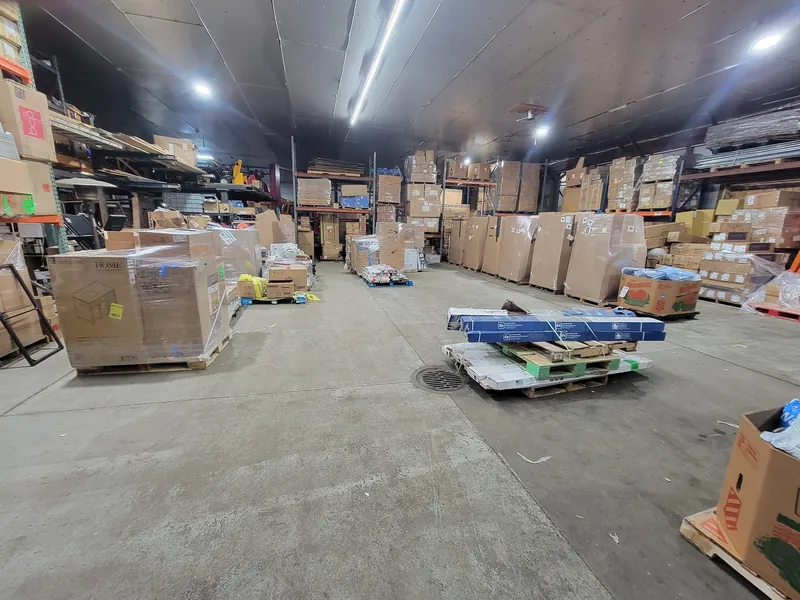
There are a few different formats these businesses take. Some are full discount retail stores with organized departments and consistent stock, almost like a budget version of a big-box store. Others are pure liquidation outlets where the inventory is completely unpredictable, pallets get broken down on the floor, and you might find a Dyson vacuum next to a box of seasonal candles. Buy liquidation items at one of these and you're essentially treasure hunting. A third type sits somewhere in the middle, closeout stores that specialize in specific categories like furniture, tools, or grocery items.
Rotating inventory is the single most important thing to understand before you visit any of these places. Unlike a regular store, what's on the shelf today will not be there in two weeks. That's both the appeal and the frustration. If you see something you want, you need to decide on the spot, because it's almost certainly not coming back.
At most liquidation and surplus stores, return policies are limited or nonexistent. Open boxes, check for missing parts, and test electronics if the store allows it. Bring batteries if you're buying anything battery-powered. A two-minute inspection can save a frustrating trip back.
Pricing at these stores is usually marked down 30% to 80% below original retail, depending on the condition and category. Electronics and furniture tend to sit on the lower end of that discount range because demand is high. Clothing, seasonal goods, and grocery overstock can hit 70% or 80% off without much trouble. Knowing that range going in helps you spot an actual deal versus something that's been artificially "discounted" from an inflated original price. And yes, that happens sometimes even at liquidation outlets.
Why People Are Showing Up at These Stores in Record Numbers
Retail returns alone hit an estimated $743 billion in 2023 according to the National Retail Federation. A big chunk of that merchandise needs somewhere to go, and liquidation channels absorb a massive portion of it. That volume has steadily grown the number of discount liquidation stores operating across the country, which means more options for shoppers and more competition on price.
Cost savings are the obvious draw. But there are a couple of other reasons this type of shopping has grown that don't get talked about as much. One is sustainability. Every product that ends up at a surplus store or bargain store is a product that didn't go into a landfill. For shoppers who care about that, it's a genuine secondary benefit, not just a feel-good talking point. Another reason is the reseller economy. Small business owners who flip goods on eBay, Amazon, Facebook Marketplace, and similar platforms have made liquidation outlets a core part of their sourcing strategy. You'll notice them at these stores pretty quickly, they're the ones with the barcode scanning apps open on their phones.
And honestly, there's just something enjoyable about not knowing what you're going to find. Regular retail is predictable to the point of being boring. Walking into a discount outlet store with no specific agenda and leaving with something you didn't know you needed, that's a genuinely different experience.
How to Actually Find a Good Overstock Store Near You
Most people start and end with a single Google search. That works sometimes, but it misses a lot. Here's a more reliable approach.
Start with targeted search terms. "Liquidation sales near me" is the most commonly used phrase, but try layering in specifics: "discount outlet store [your city]", "surplus store [your zip code]", "closeout store near me open today." Each variation surfaces slightly different results. Business directories built specifically for this niche, like Liquidation Store Pal, aggregate listings that don't always show up in a standard Google Maps search, especially for smaller independent operators who haven't fully built out their online presence.
Once you're in a directory, use filters. Filter by city or region first, then sort by rating. Don't just look at the star number, look at review volume too. A store with a 4.8-star average and 12 reviews is much harder to evaluate than one with a 4.3 average and 200 reviews. Volume gives the number meaning. Also pay attention to what specific categories the listing mentions. Some bargain stores specialize heavily in furniture. Others move mostly grocery and household goods. If you're looking for tools or electronics, a store that mostly stocks clothing and food isn't going to be worth the drive.
Check local classified sites too. Facebook Marketplace and Craigslist sometimes list one-time liquidation sales that aren't regular storefronts, a warehouse clearing out seasonal stock on a single weekend, for example. These are often the deepest discounts you'll find, but they require more work to track down and have zero recourse if something's wrong with what you bought.
One more thing that a lot of people skip: call before you go. Store hours listed online are not always accurate, especially for smaller independent discount retail stores. A quick phone call confirms hours, and sometimes the person who picks up will tell you what kind of inventory just came in. That two-minute call has saved me more than one wasted trip across town.
If you're also on the hunt for discounted food products, which many liquidation shoppers are, it's worth checking out salvage grocery options in your area through a dedicated directory that focuses specifically on that niche. The selection and pricing at salvage grocery stores can be even more aggressive than general liquidation outlets when it comes to pantry staples.
Comparing Stores: What the Data Actually Shows
Liquidation Store Pal currently lists 211 businesses, with active clusters in Vicksburg, Columbus, Las Vegas, Mooresville, and Indianapolis, each showing at least 2 listings. That geographic spread tells you something: these aren't just big-city phenomena. Vicksburg, Mississippi and Mooresville, North Carolina are not exactly metro hubs, but they have active liquidation markets. The data tells a different story than the assumption that you need to be in a major city to find a good surplus store.
Average customer rating across all listed stores is 4.4 out of 5 stars. Contrary to popular belief, discount stores don't have to mean bad experiences. A 4.4 average across 211 businesses is a solid number, comparable to what you'd see from a well-run specialty retail sector. That said, ratings vary, and the range within those 211 listings is wide.
Here are the top-rated stores currently listed, all sitting at a perfect 5.0:
| Business Name | Location | Rating | Reviews |
|---|---|---|---|
| A&R Legendary Sales - Pallet Liquidation | Delta, OH | 5.0 ★ | 114 |
| Woocky Wholesale | Omaha, NE | 5.0 ★ | 60 |
| Ohio Wholesale Liquidation Services | Columbus, OH | 5.0 ★ | 34 |
| Peak Stack Wholesale | Round Rock, TX | 5.0 ★ | 23 |
| Haus Origins Furniture Liquidation Outlet | Vineyard, UT | 5.0 ★ | 22 |
A&R Legendary Sales in Delta, Ohio stands out immediately, 114 reviews at a perfect 5.0 is exceptional by any measure. That's not a fluke or a small sample. At 114 reviews, that rating has been tested repeatedly and held. If you're anywhere near northwest Ohio, that store deserves a visit before any other on your list.
Ohio shows up twice in the top five, which is worth noting if you're in that region. Both A&R Legendary Sales and Ohio Wholesale Liquidation Services in Columbus carry perfect scores with meaningful review counts. That's not a coincidence, Ohio has a dense network of manufacturers and distributors, which means more surplus flowing into the local liquidation market.
Haus Origins Furniture Liquidation Outlet in Vineyard, Utah is a good example of a category-specific discount outlet store. Furniture liquidation is a different experience than general merchandise, pieces are larger, conditions vary more, and you really do need to inspect everything carefully. But the savings potential is also larger. A couch that retailed for $1,200 can realistically show up at a furniture liquidation outlet for $300 or less.
Before choosing between two closeout or surplus stores in your area, run through this quick list:
- Review volume: Is the star rating based on 10 reviews or 100?
- Category match: Does the store carry what you're actually looking for?
- Return policy: All sales final, or is there any flexibility?
- Inventory refresh rate: Do they post updates about new shipments on social media?
- Distance vs. selection: Is a 20-minute extra drive worth it for significantly better stock?
- Hours and access: Are they open on weekends? Is parking reasonable?
One thing worth mentioning about parking, since it comes up more than you'd expect: liquidation stores are often in industrial areas or strip malls that were designed for freight delivery, not foot traffic. Parking can be tight, especially on weekends when these places get busy. A few of the larger pallet liquidation outlets I've visited had lines before they even opened, which felt odd the first time, but makes sense once you see what gets put out on opening day.
Before You Go: A Few Things That Will Save You Time
Read reviews, but read them critically. Look for patterns, not outliers. If five different reviewers mention that a specific store's staff is unhelpful about returns, that's useful information. One reviewer complaining about a single bad experience might just be noise. Look for the pattern.
Follow the stores you like on social media. A lot of these discount retail stores post photos when new pallets come in or when a specific category is heavily stocked. That's free intel. You can time your visits around the best inventory windows instead of showing up on a slow week.
Bring cash or confirm payment methods. Some smaller surplus stores and independent liquidation outlets are cash-only or charge a processing fee for cards. It's annoying to find out at the register.
And bring a measuring tape if you're shopping for furniture or large items. Every time. You'd be surprised how many people load something into their car only to realize it doesn't fit through the door at home. Seen it happen. It's not a fun afternoon.
Frequently Asked Questions
What's the difference between a liquidation store and a regular discount store?
A regular discount store like a dollar store buys specific products at bulk pricing but still sources through normal retail channels. A liquidation store acquires inventory that retailers and manufacturers need to get rid of fast, returns, overstock, closeouts, so the pricing is more unpredictable but often deeper. Inventory rotates constantly at a liquidation outlet, whereas a discount retail store tends to carry the same products week to week.
Are items at liquidation stores safe to buy?
Generally yes, but you should inspect everything before buying. Customer returns and shelf pulls can have missing parts, cosmetic damage, or wear. Electronics should be tested if the store has a way to do that. Grocery and food items from a surplus or salvage source should be checked for expiration dates. Most reputable closeout stores grade their inventory and label conditions clearly, if a store doesn't do that, factor it into your decision.
How do I find liquidation sales near me that aren't permanent storefronts?
Check Facebook Marketplace, local Facebook groups, Craigslist, and community bulletin boards for one-time liquidation events. Warehouses, estate sale companies, and retail chains that are closing locations sometimes run short-term sales that don't get listed in business directories. Setting a Google Alert for "liquidation sale [your city]" can also surface these events before they're widely advertised.
Can small business owners buy liquidation inventory in bulk?
Yes, and many do. Some overstock and pallet liquidation stores sell full pallets or lots at wholesale prices, which works well for resellers. Stores like A&R Legendary Sales in Delta, Ohio are explicitly set up for this kind of buying. If you're planning to buy in volume, call ahead and ask whether the store sells pallets whole, what condition grades they carry, and whether they have a minimum order requirement.
What should I look for in a directory listing for a discount outlet store?
Look at star rating and review count together. Check whether the business description mentions specific product categories. Confirm that hours and contact info are current. Look for photos if the listing includes them, interior shots tell you a lot about how organized and well-run a store is. And check whether the listing links to a website or social media page where you can see recent inventory updates.
Are there liquidation stores that specialize in groceries?
Yes. Salvage grocery stores are a specific subset of the overstock and surplus world, focused on food products that have been discontinued, are near their best-by date, or were overstocked by manufacturers. They can offer dramatic savings on name-brand pantry items. If that's what you're looking for specifically, a general liquidation directory might not have many of them, a dedicated resource like a salvage grocery store directory will get you to the right listings faster.
More Ways to Save
Find the Best Overstock Store Near You
Browse our directory of 211+ businesses including top-rated liquidation outlets, surplus stores, bargain stores, and closeout shops across the country. Filter by city, rating, and store type to find the best options in your area.
Search the Directory