Liquidation Stores vs. Traditional Retail: A Comparative Analysis

1. What You're Actually Getting Into: Two Very Different Ways to Shop
Two hundred and forty-seven. That's how many liquidation and discount retail store businesses are listed in our directory right now, and they carry an average customer rating of 4.3 stars out of 5. That number stopped me for a second when I first saw it. This isn't a fringe shopping trend. People are genuinely happy with what they find at these places, and they're coming back often enough to leave reviews.

So what exactly are we comparing here? A liquidation store, sometimes called a discount liquidation store, closeout store, overstock store, or surplus store, is a retail business that buys up excess, returned, or discontinued merchandise and sells it at a steep discount. Traditional retail is what most of us grew up with: a store that orders products from manufacturers or distributors, marks them up by a set percentage, and sells them at consistent prices with consistent stock. Both formats exist to get products into your hands. That is where the similarities mostly end.
More and more people are searching for "liquidation sales near me" and "where to find liquidation stores" online, and it's not hard to understand why. Grocery bills are up. Rent is up. People are looking for ways to stretch a dollar without completely sacrificing quality. A bargain store stocked with name-brand household goods at 50% off starts looking pretty good in that context.
This article breaks down both retail formats honestly, so you can figure out which one fits your situation on any given shopping trip. Sometimes you need the guarantee of traditional retail. Sometimes you'd be leaving serious money on the table by not checking a discount outlet store first.
2. How Liquidation Stores Actually Source Their Inventory
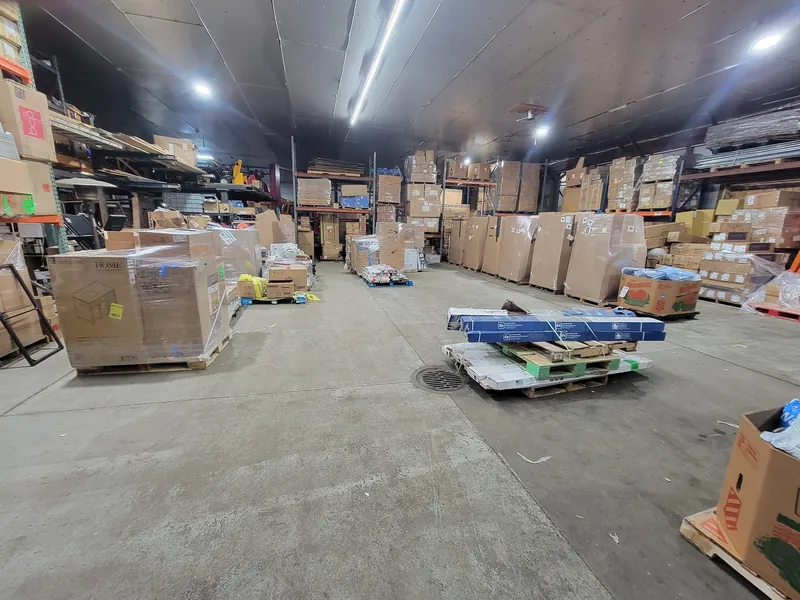
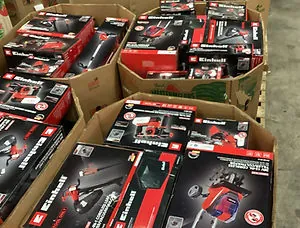
Walking into one of these stores for the first time can feel almost chaotic, and that's because the sourcing model is genuinely different from anything traditional retail does. A discount liquidation store doesn't call up a manufacturer and order 500 units of a specific product. Instead, they buy pallets, truckloads, or lots of merchandise from big-box retailers, department stores, online sellers, and manufacturers who need to move product fast.

That merchandise falls into a few categories. Overstock means the original retailer ordered too much and couldn't sell it all. Shelf pulls are products that sat on store shelves but were never bought, maybe because a display model replaced them or the season ended. Customer returns are products that came back to the original store for any number of reasons, some barely touched, some with a missing part or two. Closeout merchandise comes from brands or retailers that are discontinuing a product line entirely. Each of these inventory types arrives at the liquidation store at a fraction of its original cost, which is how the savings get passed to shoppers.
Different store formats handle this differently. Some surplus stores specialize in one category, like furniture or tools. Others are true mixed-lot stores where you might find a Keurig next to a set of bedsheets next to a box of phone cases. Buy-liquidation-items platforms online work similarly, but you're bidding on or buying pallets directly rather than picking individual items off a shelf. The physical store format is more approachable for most people, especially if you want to inspect something before you buy it.
Inventory changes constantly. That's the key thing to understand about this sourcing model. A closeout store does not restock the same items week after week the way a Target or Walmart does. What's there today is what they bought last week. When it's gone, it's gone. This creates the "treasure hunt" quality that regular shoppers at these places genuinely love, but it also means you can't plan around specific items the way you might at traditional retail.
Because liquidation and closeout stores receive new inventory on irregular schedules, frequent visits are the real strategy. Ask the staff when new pallets typically arrive. Many regulars plan their visits around delivery days for the best selection. Some stores will even let you leave your contact info for specific product categories you're hunting for.
3. Pricing, Inventory Consistency, and the Shopping Experience Side by Side
Let's be direct about prices. Traditional retail operates on markup margins that are consistent and predictable. A clothing retailer might mark up items 50 to 100 percent over their cost. Electronics stores work on thinner margins but still need to cover overhead, staff, and returns. Sales happen on a schedule: Black Friday, end-of-season clearance, holiday weekends. Outside those windows, prices mostly hold firm.
A discount liquidation store operates on completely different math. Because acquisition costs are so low, savings of 20 to 80 percent off original retail prices are genuinely common, not just marketing language. You might find a branded kitchen appliance that retailed for $80 sitting on a shelf for $22. Or a pallet of cleaning supplies that each carry a $6 retail tag selling for a dollar apiece. The gap between what these stores pay for goods and what traditional retailers pay is enormous, and that gap flows directly to shoppers willing to do a little digging.
Inventory consistency is where traditional retail holds a clear advantage. If you need a specific size of a specific brand of running shoe, a regular sporting goods store is your best bet. A surplus store might have exactly that shoe in exactly your size this week. Next week, zero chance. One-time inventory is the whole model, and you either work with that or you don't.
In practice, the shopping experience itself feels completely different between these two formats. Traditional retail is designed for ease and comfort. Products are organized by category, staff know the inventory, signage is clear, and you can usually find what you came for in ten minutes. A bargain store is messier. Not always dirty, just dense and unpredictable. Products might be sorted roughly by category or just organized by when they arrived. Price tags are sometimes handwritten. Some items are in original packaging, others aren't. And honestly? For a lot of shoppers, that's part of the appeal. There's genuine excitement in not knowing what you'll find.
4. Real Advantages and Honest Disadvantages of Each Format
No retail format is perfect. Both have real strengths and real weaknesses, and pretending otherwise doesn't help anyone.
What Liquidation and Overstock Stores Do Well
Cost savings are the obvious one. But beyond price, these places offer something traditional retail almost never does: the chance to find genuinely surprising products. Name-brand items, seasonal specialty goods, and even high-end products occasionally show up in the mix because of how the sourcing works. There's also an environmental argument to be made here. Redirecting surplus and overstock goods away from landfills is a real benefit, and some shoppers specifically seek out discount retail stores for that reason.
Accessibility for budget-conscious families is genuinely significant. Someone furnishing a first apartment, stocking a pantry after a tough month, or outfitting a home office without a big budget can find real solutions at a liquidation store that would be out of reach at standard retail prices. Stores like Haus Origins Furniture Liquidation Outlet in Vineyard, UT, which carries a perfect 5.0 rating from 22 reviewers, are proof that this kind of shopping doesn't mean compromising on quality.
Speaking of food budgets: if you're trying to cut grocery costs alongside household goods, it's worth knowing that salvage grocery options in your area follow a similar model to liquidation stores, buying surplus and near-date food products at reduced costs and passing those savings on directly to shoppers.
What Traditional Retail Does Well
Consistency. Warranties. Returns. These three words explain why traditional retail still dominates overall spending. If a laptop you bought at Best Buy has a defect, there's a clear path: manufacturer warranty, store return policy, customer service desk. Those safety nets matter enormously for big-ticket purchases.
Traditional retail also wins on specific item availability. Loyalty programs, price matching, and the ability to order something that isn't in stock are all real advantages. If you need a specific model of a specific thing by a specific date, traditional retail gives you the best chance of making that happen reliably.
The Honest Downsides
Liquidation stores sometimes sell items without original packaging, missing accessories, or without any return policy at all. Some products are customer returns for a reason. You should always inspect items carefully before buying, and for anything with moving parts or electronics, test it if the store allows it.
Traditional retail, on the other hand, is expensive. And it generates enormous amounts of waste. Unsold inventory often gets destroyed rather than discounted beyond a certain point, which is a genuinely strange thing when you think about it too hard. Markdowns are calculated carefully to protect margins, which means the consumer rarely sees the deepest possible price.
Check for broken seals, missing parts, and visible damage. For electronics, ask if there's a power outlet to test. For clothing, check seams and zippers. For furniture, look at joints and drawer slides. Most of these stores have a no-return policy, so a two-minute inspection saves you a headache later.
5. What the Industry Data Actually Shows About This Market
Two hundred and forty-seven businesses listed across five cities is a meaningful sample. Phoenix leads with 4 listings, followed by New Castle and Atlanta with 3 each, and South Gate and St. Peters with 2 listings each. That geographic spread shows this isn't a regional phenomenon tied to one city's economic conditions. These stores are showing up in mid-sized cities, sunbelt metros, and suburban areas alike.
The 4.3-star average is the number that should really get your attention, though. Think about what that means in context. Restaurants average somewhere around 3.5 to 4.0 stars on most platforms. Service businesses like plumbers and electricians hover around 4.0 to 4.2. For a retail category that spent years fighting a reputation as a "junk store," hitting 4.3 average across 247 businesses says something real about how these places have evolved.
Look at the top performers in this directory data and the pattern is striking. A&R Legendary Sales - Pallet Liquidation in Delta, OH holds a perfect 5.0 stars across 114 reviews. That's not a handful of friends leaving kind words; that's over a hundred people who thought the experience was worth a perfect rating. Woocky Wholesale in Omaha, NE has 60 five-star reviews. Ohio Wholesale Liquidation Services in Columbus, OH earned 34 perfect reviews. Peak Stack Wholesale in Round Rock, TX and Haus Origins Furniture Liquidation Outlet in Vineyard, UT round out the top performers, each at 5.0 stars.
| Business Name | Location | Rating | Reviews |
|---|---|---|---|
| A&R Legendary Sales - Pallet Liquidation | Delta, OH | 5.0 ★ | 114 |
| Woocky Wholesale | Omaha, NE | 5.0 ★ | 60 |
| Ohio Wholesale Liquidation Services | Columbus, OH | 5.0 ★ | 34 |
| Peak Stack Wholesale | Round Rock, TX | 5.0 ★ | 23 |
| Haus Origins Furniture Liquidation Outlet | Vineyard, UT | 5.0 ★ | 22 |
A decade ago, a lot of people associated liquidation shopping with questionable products and sketchy storefronts. That reputation was sometimes earned. But the data here suggests something has shifted. These are businesses with real review volumes and high satisfaction scores, operating in a format that clearly serves its customers well when done right.
And the Ohio concentration is interesting, for what it's worth. Delta, Columbus, and the broader Midwest showing up strongly in liquidation retail makes sense when you consider the region's density of manufacturing, warehousing, and distribution. More goods moving through the middle of the country means more overstock and returns to buy up cheaply.
6. When to Choose Each Format: Practical Guidance for Real Shopping Decisions
Here's where this comparison gets genuinely useful. Not as a general philosophy but as a practical decision you make before you get in the car.
Go to a Liquidation or Closeout Store When...
You're stocking up on household essentials. Cleaning supplies, paper products, kitchen tools, and pantry staples show up in overstock stores regularly and can be bought at a fraction of retail. Buying six months of dish soap at 70% off is a smart move with no real risk, since these are consumables without warranty concerns.
You're furnishing a home or apartment on a budget. This is where a discount outlet store really shines. Furniture, bedding, small appliances, and home decor turn up in liquidation inventory constantly, and the savings on these categories can be dramatic. A couch that retailed for $800 showing up for $250 is not unusual. Inspect it carefully, obviously, but the deal can be real.
You're outfitting a workspace or garage. Tools, shelving, storage bins, and workshop supplies are common in surplus store inventory. These are categories where brand loyalty matters less and functionality matters more, making liquidation sourcing a smart fit.
You're a reseller or small business owner. Buying liquidation items in volume for resale is an entire business model. Pallet liquidation stores like A&R Legendary Sales specifically cater to buyers who want quantity at rock-bottom acquisition costs.
Stick with Traditional Retail When...
You're buying electronics that need warranty coverage. A television, laptop, or phone without any warranty protection is a real risk. Traditional retail gives you manufacturer warranty plus often an extended warranty option. That protection has genuine dollar value for high-cost electronics.
You need a specific item by a specific date. Shopping for a birthday gift next week? A wedding present for Saturday? You cannot count on a closeout store to have what you need when you need it. Traditional retail, including online retail with guaranteed delivery, is the only reliable option for time-sensitive, specific purchases.
You're buying medication, food, or safety equipment. Expiration dates, regulatory compliance, and safety certification matter here. These are not categories to gamble on to save a few dollars. Stick with regulated, traditional retail channels for anything in these categories.
I would shop at a discount liquidation store first for almost every household category before going to traditional retail, honestly. Typically, the savings are too good to ignore for non-critical purchases. But I'd never buy a laptop or a car seat at one.
1. Go early and go often. Best selection is right after new inventory arrives. Ask staff about delivery schedules.
2. Bring cash. Some smaller surplus stores still prefer cash, and it can sometimes open the door to additional negotiation on price.
3. Skip the return policy assumption. Most liquidation stores sell as-is. Inspect before you commit.
4. Check the original retail price. Search the product on your phone before buying to confirm you're actually getting a deal. Sometimes items are priced as if they're liquidation when they're not.
5. Look for pallet lots if you're buying in quantity. Stores that sell whole pallets can offer even deeper savings for buyers who need volume.
If you're already thinking about cutting costs across multiple shopping categories, it's worth exploring the broader world of discount retail beyond just liquidation stores. For grocery budgets specifically, you might want to check out the salvage grocery store directory, which covers a similar model applied to food products and pantry staples.
The Bottom Line
Both retail formats exist because both serve real needs. Traditional retail offers certainty, warranty, and consistency. A liquidation store, closeout store, or surplus store offers something different: genuine savings, rotating inventory, and the occasional find that feels almost too good to be true but isn't.
The 4.3-star average across 247 directory listings is not the number of a sector that shoppers are tolerating. It's the number of a sector people are recommending to their friends.
Start with the surplus store for household goods, cleaning supplies, furniture, and tools. Save traditional retail for the purchases where warranty coverage and specific availability actually matter. That split strategy will serve most households better than defaulting to either format exclusively.
And if you're new to this style of shopping, just go once. Walk in without a list and see what's there. You'll probably understand the appeal pretty fast.
What is the difference between a liquidation store and a thrift store?
A liquidation or closeout store buys new or like-new overstock, returns, and surplus merchandise directly from retailers and manufacturers. A thrift store accepts donations from individuals and typically sells used items. Liquidation stores often carry name-brand new products still in original packaging, while thrift stores sell a mix of used goods.
Are products at liquidation stores safe to buy?
Most are, especially overstock and shelf-pull merchandise that was never used. Customer returns require more caution, particularly for electronics, baby gear, and safety equipment. Always inspect items before buying, and test electronics if the store allows it. For anything safety-critical, traditional retail with warranty coverage is the smarter choice.
How do I find a good discount liquidation store near me?
Our directory lists 247 businesses across multiple cities with real customer ratings. Search by city to find nearby options. Phoenix, Atlanta,