Maximizing Savings: The Ultimate Guide to Discount Retail Stores
What If You Could Cut Your Shopping Budget in Half?
That's not a trick question. Millions of shoppers are already doing it, quietly, at discount liquidation stores tucked into strip malls, industrial parks, and downtown storefronts across the country. These places don't advertise much. They don't need to. Word travels fast when you find a brand-name blender for $12 or a full patio set for less than you'd pay for a single chair at a big-box store.

Discount retail stores, also called liquidation stores, bargain stores, closeout stores, overstock stores, surplus stores, and about a dozen other names depending on who you ask, are all part of the same general world: businesses that buy excess inventory cheap and pass those savings directly to you. Manufacturers overproduce. Big retailers clear out seasonal stock. Return pallets pile up in warehouses. Someone has to move all that merchandise, and that someone is usually a scrappy discount outlet store operator who knows exactly how to buy it low and sell it fast.
This guide covers everything you need to know about finding these stores, shopping smart inside them, and actually walking out with the deals you came for. We'll look at real data on the industry, pull in numbers from the Liquidation Store Pal directory, and share specific strategies that make a difference between a frustrating trip and a genuinely great haul. Whether you're a budget-conscious household shopper or a small business owner looking to cut inventory costs, there's a lot here worth reading.
What Are Discount Liquidation Stores, Really?
Most people have a vague idea that liquidation stores sell cheap stuff. But the actual business model is more specific than that, and understanding it helps you shop smarter.
Here's how it works. A major retailer, say a large department store or a national grocery chain, ends up with products they can't sell at full price. Maybe the packaging changed. Maybe the season ended. Maybe a product line got discontinued, or a shipment of customer returns piled up faster than they could process it. Rather than sitting on that inventory and eating the cost, they sell it in bulk to liquidation buyers, sometimes for pennies on the dollar. Those buyers are the operators of your local bargain store or closeout store, and they pass a big chunk of those savings to customers who know where to look.
The terminology can get confusing, and honestly the different names blur together depending on your region. A liquidation store typically focuses on distressed inventory, returns, and shelf pulls. A closeout store often buys end-of-line merchandise that brands are clearing out permanently. An overstock store specifically handles surplus that retailers overbought. A surplus store might lean toward tools, military goods, or industrial supplies. And a discount outlet store is often a catch-all term that covers any of the above. In practice, many stores mix all of these inventory streams together, so you'll often see all five categories under one roof.

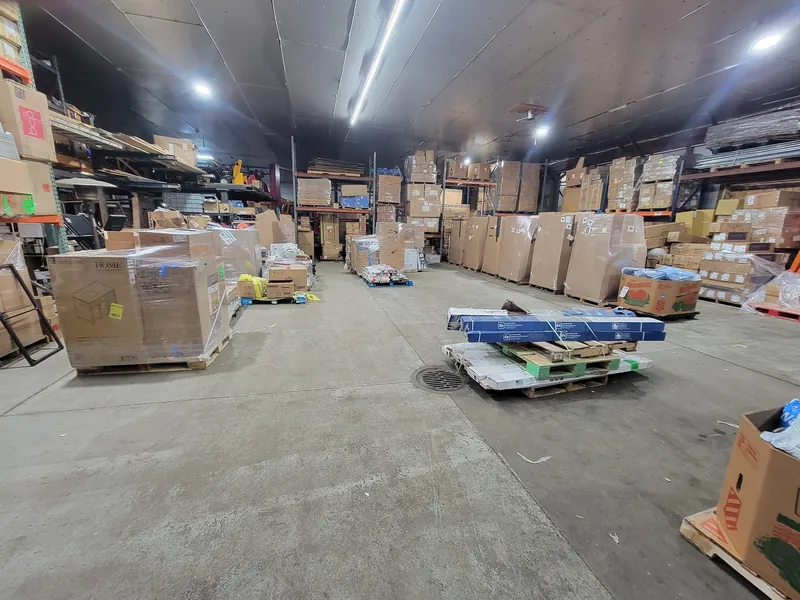
Product variety is genuinely wild at these places. Walking into a well-stocked discount retail store for the first time, you might find canned goods next to power drills next to a pile of throw pillows next to a display of off-brand shampoo. It's not organized the way Target is organized. That's part of the appeal for some people, and part of the frustration for others. On a single visit you could come across household goods, clothing, furniture, seasonal decorations, electronics, cleaning supplies, pet products, and groceries. The mix changes constantly because the inventory is never the same twice.
Good stores usually specialize at least somewhat. A store focused on grocery surplus will have a very different feel than one that buys electronics returns. Pay attention to what a particular store tends to carry before making a long drive. Reviews and directory listings can tell you a lot about what to expect.
Searching "liquidation sales near me" will pull up different results than "closeout store" or "overstock store" depending on how local businesses label themselves. Try several variations. Business directories like Liquidation Store Pal index stores under multiple terms, which saves you a lot of search frustration.
The Real Financial Case for Shopping Discount
Let's talk numbers, because the savings at these stores are not marginal. They're often dramatic.
Industry research consistently puts the discount retail market at well over $600 billion in annual US sales when you factor in all the subcategories, from liquidation-specific stores to discount outlet chains. More specific to the liquidation segment, B-Stock Solutions, one of the largest business-to-business liquidation platforms in the country, has reported that the secondary market for returned and excess retail goods alone generates over $100 billion annually in the US. That's not a niche. That's a major part of how retail actually works.
Shoppers at liquidation and closeout stores regularly report savings of 50 to 70 percent off comparable retail prices. On some categories, especially electronics returns and brand-name clothing, the discounts can hit 80 percent or more. A $200 kitchen appliance showing up for $40 is not unusual. Neither is a $90 tool set priced at $22. In practice, the inconsistency of inventory means you won't always find exactly what you need, but when the right item shows up, the savings are real.
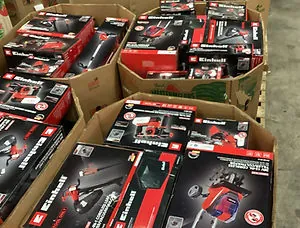
And small business owners have figured this out in a big way. Resellers on platforms like eBay, Amazon, and Facebook Marketplace regularly source their inventory from liquidation stores and buy liquidation items in bulk directly from brokers. Typically, the margin math works well when you're buying a pallet of mixed electronics for $300 and reselling individual items for $20 to $80 each. Some resellers build full-time income on this model.
Looking at the Liquidation Store Pal directory specifically, there are currently 13 businesses listed across five cities, Columbus, Dothan, Elkville, Indianapolis, and Anniston. That's a focused, curated set of listings, not a massive sprawl. And the average customer rating across those listings sits at 4.1 stars out of 5. That number matters. These aren't desperate, low-quality shops scraping by on bad product. A 4.1 average means people are leaving satisfied, coming back, and saying so publicly.
| Business Name | Location | Rating | Reviews |
|---|---|---|---|
| Ohio Wholesale Liquidation Services | Columbus, OH | 5.0 ★ | 34 |
| KAPS Wholesale Liquidators, LLC | West Monroe, LA | 5.0 ★ | 1 |
| Southern Illinois Liquidation Outlet | Elkville, IL | 4.8 ★ | 15 |
| Uniontown Liquidation Outlet | Uniontown, PA | 4.7 ★ | 18 |
| The Liquidation Warehouse | South Houston, TX | 4.5 ★ | 52 |
Notice that The Liquidation Warehouse in South Houston has 52 reviews at 4.5 stars. That's a lot of feedback for a discount retailer, and it's overwhelmingly positive. Ohio Wholesale Liquidation Services pulled a perfect 5.0 from 34 reviewers. These are real, active businesses with loyal customers, not fly-by-night operations. That's worth saying plainly.
If you're trying to cut your grocery budget specifically, it's also worth knowing that salvage grocery retail is its own growing niche with dedicated stores that focus purely on food and pantry goods. You can browse salvage grocery options in your area for discounted canned goods, dry food, and surplus packaged items that regular liquidation stores may not always carry in depth.
How to Actually Find These Stores Near You
This is where a lot of people get stuck. Discount liquidation stores don't always show up easily in a basic Google Maps search because they often don't invest heavily in SEO or advertising. They rely on regulars and word of mouth. So you have to be a little more deliberate.
Start with specific search terms. Typing "liquidation sales near me" into Google is a good opening move, but also try "closeout store," "buy liquidation items," "surplus store near me," and "discount outlet store." Each variation pulls different results because different businesses use different labels for themselves. Don't just stop at the first page. Scroll through, check a few business profile pages, and look at the hours and recent reviews before deciding it's worth a trip.
Business directories are genuinely underused for this kind of search. Liquidation Store Pal exists specifically to list and rate these stores in one place, which means you're getting curated results instead of a jumble of ads and loosely related businesses. When you're browsing a directory listing, here's what to actually look for: the product specialty or categories the store carries, the hours of operation and whether they're kept updated, the customer rating and the number of reviews behind it, and any notes about return policies or special sale days. A store with 50 reviews and a 4.5 rating is a much safer bet than one with 2 reviews and no other information.
Social media is surprisingly good for this too. Local Facebook groups, especially ones focused on frugal living or deal-hunting, often have members who post when a new liquidation store opens or when a specific store gets a big shipment in. Searching "liquidation" or "overstock" in local community Facebook groups can turn up tips you won't find anywhere else.
For people in rural areas, the math sometimes involves driving. If you're 45 minutes from a mid-sized city, it may absolutely be worth the trip if the store is well-stocked and you're buying in volume. As a rule, the savings on a single cart of goods can easily cover gas and then some. Check regional directories and not just local ones. The Southern Illinois Liquidation Outlet in Elkville, for example, rated at 4.8 stars, serves a region that isn't exactly a major metro. People drive for it.
Product specialties, does the store focus on grocery, tools, electronics, or general merchandise?
Rating and review count, a 4.0 from 40 people means more than a 5.0 from 2.
Hours of operation, some stores have limited hours or close early on weekdays.
Return policy notes, many liquidation stores are all-sales-final. Know before you buy.
Social links or contact info, active stores usually post restock updates on Facebook or Instagram.
One more thing worth mentioning: sign up for newsletters or follow these stores on social media if you find one you like. Many bargain stores post when new pallets arrive, and those first hours after a restock are when the best items are still on the shelf. Showing up a week after a shipment means picking through what everyone else already passed on.
How to Actually Shop Smart at a Bargain Store
Finding the store is step one. Getting real value out of the visit is a different skill entirely.
Arrive early. This sounds simple but it is genuinely the single most important shopping tip for discount retail. Liquidation store inventory moves fast, especially on good items. A pallet of name-brand cookware might be gone by noon. Good electronics go in hours. If a store restocks on Thursdays, being there Thursday morning puts you in a completely different position than showing up Saturday afternoon to whatever's left.
Ask about restock schedules. Most stores have them, and most employees will tell you if you just ask politely. Some places get new shipments weekly, some bi-weekly, some irregularly depending on what's available from their suppliers. Knowing the rhythm of a specific store is worth more than any coupon.
Inspect everything before you buy. This is non-negotiable at a closeout store or overstock store because you're often looking at customer returns, items with damaged packaging, or products that were pulled from shelves for reasons that aren't always obvious. Check electronics for missing accessories or visible damage. Open boxes when you're allowed to. Look at expiration dates on food products. Examine clothing for staining or missing buttons. None of this is paranoia; it's just how smart shopping works in this environment.
Understand the return policy before you commit to anything big. A huge number of discount liquidation stores operate on an all-sales-final basis, which is completely reasonable given how they're sourcing their inventory. But it means you cannot afford to be impulsive about a $75 purchase without inspecting it first. Small items, go ahead and take a chance. For anything significant, know what you're buying.
Bring cash if you can. Some smaller surplus stores prefer it or offer a slight discount for cash transactions. Not all of them, but it happens often enough to be worth mentioning. Ask at the register before you assume.
Buy multiples when you find something great. This is the part that newer liquidation shoppers often don't internalize fast enough. If you find a product you use regularly at 60 percent off and the store has ten of them on the shelf, buy five. These stores won't restock the same item. When it's gone, it's gone. For most shoppers, the mindset shift from "buy what I need this week" to "stock up when the deal is here" is what separates occasional bargain shoppers from people who genuinely cut their budgets in half.
One more practical note: wear comfortable shoes and bring bags or boxes. Some discount retail stores, especially warehouse-style ones, are big and require a lot of walking. Parking lots at these places can be sprawling too, often in industrial areas with uneven pavement. It sounds like a small thing, but three hours of deal-hunting in uncomfortable shoes is a miserable experience that will make you rush through and miss things.
✔ Arrive early, especially on restock days
✔ Ask staff when new inventory comes in
✔ Inspect all items before buying, especially electronics and food
✔ Read the return policy at the entrance or ask directly
✔ Bring cash as backup, some stores discount for it
✔ Buy multiples of things you use; the same item won't come back
✔ Wear comfortable shoes for warehouse-style stores
Small business owners and resellers need to add one more step to this process: know your margins before you leave the house. Walk in with a price guide open on your phone. Apps like the Amazon Seller app let you scan barcodes and see what an item is currently selling for online. If you're looking at a pallet of mixed goods, do the rough math fast. Paying $3 per unit for something that sells for $18 is a win. Paying $8 per unit for something that sells for $9.50 is not. Most deals are real, but only if you know what you're actually looking at.
For those who want to extend the discount mindset to their entire grocery budget, a salvage grocery store is a natural complement to your liquidation shopping routine. These specialty stores focus specifically on surplus food inventory, and finding a salvage grocery store near you could knock another significant chunk off your monthly food costs alongside your other discount shopping.
Frequently Asked Questions
What is the difference between a liquidation store and a thrift store?
Thrift stores primarily sell donated secondhand goods, usually clothing, books, and household items. Liquidation stores buy new or like-new overstock, returns, and surplus inventory directly from manufacturers and retailers. These products at