The Complete Guide to Closeout Warehouses: What to Expect and How to Save

Your Money Is Tight. So Why Are You Still Paying Full Price?
Groceries are up. Rent is up. Gas is up. And somewhere in the middle of all that, you're still expected to furnish your home, clothe your family, stock your kitchen, and maybe, just maybe, buy something for yourself once in a while without feeling guilty about it. That pressure is real, and a lot of people are quietly starting to do something smart about it: they're walking into closeout warehouses and walking out with brand-name goods for a fraction of what they'd pay anywhere else.

A closeout warehouse is not a thrift store, and it's not some sketchy back-alley operation. These are real retail businesses that buy overstock, discontinued products, customer returns, and surplus inventory directly from manufacturers and major retailers, then sell it all to the public at prices that often feel almost unreasonably low. We're talking 30%, 50%, sometimes 90% off what you'd pay at a traditional store. This guide is going to walk you through exactly how these places work, what you can find inside them, why the savings are legitimate, and how to find one near you.
What Is a Closeout Warehouse and How Does It Work?
Most people have walked past a discount liquidation store without really knowing what it was. Maybe you saw a hand-painted sign, or a storefront that looked a little rough around the edges, and kept driving. That's understandable. But the business model behind these places is actually pretty straightforward once you understand it.
Manufacturers and big retailers end up with excess inventory constantly. A clothing brand overestimates demand for a seasonal line. A big-box electronics store upgrades its product mix and needs to clear shelf space. A furniture company discontinues a model. In all these cases, that leftover product has to go somewhere. Sending it back to a warehouse costs money. Destroying it costs money and, honestly, it's wasteful. So they sell it off, often in bulk pallets or truckloads, to liquidation buyers at a deep discount. And that's where closeout warehouses come in.
A good closeout store buys those pallets, sorts through the merchandise, prices it, and puts it on the floor for regular shoppers. Because they paid so little for the inventory to begin with, they can sell it to you at prices that leave traditional retailers nowhere to compete. The overstock store is not cutting corners on service or running some kind of scam; it's just operating with a very different cost structure than a department store.
Worth knowing: these stores go by a lot of names. Surplus store, bargain store, discount outlet store, overstock store, discount retail store, they're all pointing at roughly the same idea, though each format has slight differences. A true surplus store, for example, tends to focus on industrial or government-sourced excess goods. A discount liquidation store casts a wider net and might carry everything from kitchen appliances to winter coats. Closeout stores often focus on a single retailer's returns or discontinued lines. In practice, though, the lines blur, and most shoppers will use these terms interchangeably.
Before you visit any closeout warehouse, check whether it's a general merchandise store or a category-specific one. Some specialize in furniture, others in food and grocery surplus. Knowing this ahead of time saves a wasted trip.
One thing that genuinely sets the closeout warehouse model apart is the supply chain speed. In traditional retail, a product might sit in a distribution center for weeks before hitting a store shelf. In a liquidation store, inventory turns fast. Stuff comes in, gets priced, and goes on the floor within days. That speed is part of why prices stay low, and it's also why the selection changes constantly.

What Can You Find at a Closeout or Liquidation Store?
Honestly? Almost anything. That's not an exaggeration.
Home goods are probably the most common category, pots, pans, small appliances, bedding, towels, lighting fixtures, decorative stuff. Electronics show up regularly too, though you want to be a little careful there (more on that in a second). Apparel is big, especially seasonal clothing that didn't sell before a retailer needed to clear the floor. Tools, hardware, outdoor furniture, pet supplies, toys, baby gear, automotive accessories, all of these show up in closeout stores with some regularity.
Food and grocery surplus is its own interesting niche. Some liquidation stores carry shelf-stable food items, beverages, and pantry goods that are either overstocked, close to but not past their best-by date, or discontinued. If that sounds appealing to you, there are stores that specialize specifically in this category; you can even explore salvage grocery options near you through dedicated directories built just for that type of store.
Now, about item condition. This is where shoppers need to pay attention. Not everything in a closeout or surplus store is brand new. Some of it is, genuinely, never-been-opened overstock that just got cleared from a retailer's shelves. But some items are "shelf pulls", products that were on display, handled by customers, maybe had a box that got dented. And some are actual customer returns, which means they were bought, used, and sent back.
Most reputable closeout warehouses grade or at least informally categorize their merchandise so you know what you're getting. Look for signage or ask staff. If a blender is sealed in its original box, that's different from one that's been opened and repackaged. For electronics especially, always check the return policy before you buy, and if the store lets you test it, do it right there in the aisle. I would never buy a returned electronic item without testing it first if that's an option.
And here's what makes shopping at a discount liquidation store genuinely fun for a lot of people: you never know what's going to be there. One week it might be a pallet of name-brand cast iron cookware. Next week, outdoor patio sets. This unpredictability is both the biggest draw and the one thing that frustrates shoppers who need a specific item on a deadline. If you need something by Thursday, a closeout warehouse is probably not your best bet. But if you're open to what's there, you can stumble onto deals that feel almost ridiculous.
The Real Benefits of Shopping at Discount Liquidation and Closeout Stores
Let's talk numbers. Savings at a good closeout warehouse regularly run between 30% and 90% off standard retail pricing. Not store-sale pricing. Regular, everyday retail pricing. A $200 kitchen appliance might be sitting on a liquidation shelf for $45. A set of bed sheets that retails for $80 might be $18. These are not made-up examples; this is the kind of pricing that regular shoppers at these stores have learned to count on.
For budget-conscious households, that math adds up fast. A family that furnishes even a single room by buying liquidation items instead of shopping at a regular furniture store can save hundreds of dollars in a single trip. Small business owners who need supplies, equipment, or products for resale find closeout stores genuinely useful too. The savings are real and repeatable, not just a one-time lucky find.
There's also an environmental angle that doesn't get talked about enough. All that overstock merchandise, if it doesn't get sold through a surplus store or discount outlet store, a lot of it ends up destroyed or in a landfill. Buying it instead of letting it get thrown away is genuinely the better outcome. It's not the main reason people shop at these places, but it's a real benefit and worth mentioning.
Resellers have figured this out in a big way. Buying liquidation items in bulk or as individual finds, then reselling them on platforms like eBay, Facebook Marketplace, Amazon, or at flea markets has become an actual business model for a lot of people. Some do it as a side hustle. Others have built full-time operations around sourcing from closeout stores and liquidation sales. In practice, the margins can be solid when you know what you're looking for, and the closeout warehouse is where it all starts.
Closeout Warehouse Industry Data and Directory Insights
People sometimes assume that discount stores mean low-quality experiences. Bad customer service, disorganized shelves, questionable merchandise. That assumption does not hold up when you actually look at the data.
Liquidation Store Pal's directory currently lists 247 businesses across multiple states and cities, and the average customer rating across all those listings is 4.3 stars out of 5. That's not a mediocre score. That's genuinely good. For context, plenty of well-known chain restaurants and big-box retailers would be thrilled with a 4.3 average. These are stores that real customers are walking into, finding value in, and coming back to.
Look at the top-rated businesses in the directory and the pattern gets even clearer.
| Business Name | Location | Rating | Reviews |
|---|---|---|---|
| A&R Legendary Sales - Pallet Liquidation | Delta, OH | 5.0 ★ | 114 |
| Woocky Wholesale | Omaha, NE | 5.0 ★ | 60 |
| Ohio Wholesale Liquidation Services | Columbus, OH | 5.0 ★ | 34 |
| Peak Stack Wholesale | Round Rock, TX | 5.0 ★ | 23 |
| Haus Origins Furniture Liquidation Outlet | Vineyard, UT | 5.0 ★ | 22 |
A&R Legendary Sales in Delta, Ohio has 114 reviews and a perfect 5.0 rating. That's not luck. That's a business that has learned how to treat customers well and deliver on what it promises. Woocky Wholesale in Omaha has 60 reviews and the same score. Ohio Wholesale Liquidation Services, Peak Stack Wholesale in Round Rock, Texas, and Haus Origins Furniture Liquidation Outlet in Vineyard, Utah are all sitting at 5.0 stars too. Five separate businesses in different states, different product categories, different sizes, all earning perfect ratings. That tells you something about the category as a whole.
Geographically, the top cities in the directory include Phoenix with 4 listings, New Castle and Atlanta each with 3, and South Gate and St. Peters each with 2. Spread out like that, it's clear that closeout warehouses are not some regional quirk. They exist in major metros and smaller cities alike. And where the directory has 2 or 3 listings, there are almost certainly more stores nearby that just haven't been added yet.
A 4.3-star average across 247 businesses is not what you'd expect from a category with a reputation problem. If you've been skeptical about whether discount liquidation stores are worth your time, these numbers are a reasonable reason to reconsider.
How to Find Closeout and Liquidation Stores Near You
Finding a good closeout warehouse used to mean driving around and stumbling onto one. That's changed.
Starting with a directory like Liquidation Store Pal is the most direct route. You can search by city or state and get actual business listings with ratings, addresses, and sometimes photos or category information. It cuts out the guesswork and gets you to a list of vetted options fast. Searching "liquidation sales near me" in Google also works, and tends to surface both directory results and individual store websites. Terms like "closeout store," "overstock store," or "bargain store near me" will also pull up relevant results, though the quality of results varies.
Yelp and Google Maps are useful too, especially for reading recent reviews. An overstock store that had great reviews three years ago might have changed ownership or stock quality, so recent reviews matter more than overall totals in some cases.
If you're in a smaller town and not finding much through searches, look for wholesale clubs or buying groups in your area. Some smaller surplus stores operate almost entirely on word of mouth or through Facebook groups, and they don't always show up in standard search results. Asking around in local community groups online can surface options that you'd never find otherwise.
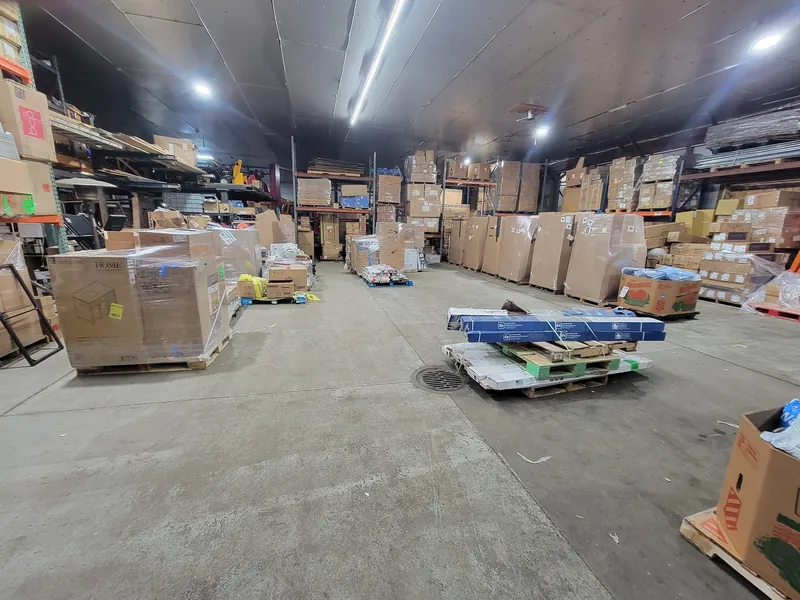
One more thing worth knowing about the physical experience of shopping at these places: they're not always fancy. Some of the best closeout warehouses I've heard about are in plain industrial buildings with concrete floors, metal shelving, and fluorescent lighting. Parking lots are often shared with other warehouse-type businesses. Don't let the exterior fool you into skipping it. Some remarkable deals live inside very ordinary-looking buildings.
Once you find a store you like, go back regularly. Because inventory turns over constantly at a discount liquidation store, every visit is different. Shoppers who go once a week or even once every couple of weeks consistently find things they couldn't have planned for. That kind of regular browsing, without pressure to buy anything specific, is actually a really good way to shop these places.
Tips for Getting the Most Out of Your Visit
Go in without a rigid list. Seriously. Closeout shopping rewards flexibility. If you walk in absolutely needing a specific brand of vacuum cleaner, you'll probably leave disappointed. If you walk in open to finding a good vacuum at a great price, you've got a decent shot.
Inspect everything before you buy it. Check that zippers work, boxes aren't crushed in ways that suggest damage inside, cords aren't frayed, and electronics power on if you get the chance to test them. Most reputable stores understand this and won't rush you. If a staff member gets impatient with you for checking an item carefully, that's actually useful information about the store.
Ask about return policies up front. Policies vary wildly between stores. Some offer a 7-day return window on most items. Others are strictly all-sales-final, especially on electronics or items sold as-is. Knowing before you buy saves arguments later.
Bring cash if you can. Some smaller surplus stores or discount outlet stores prefer it, and occasionally they'll give a slight additional discount for cash purchases. Not always, but it happens.
And if you're shopping for resale purposes, bring your phone and do quick price checks before you commit to buying. A blender that looks like a great deal at $30 might only resell for $25 after fees. Or it might resell for $90. Knowing which situation you're in takes about 45 seconds and saves real money.
Frequently Asked Questions About Closeout Warehouses
Are products at closeout warehouses safe to buy?
Most merchandise at a legitimate closeout or surplus store is perfectly safe. Overstock and discontinued items are often brand new and have never been used. Customer returns vary more, so inspect those closely. For anything involving safety, like a child's car seat or a medical device, be more cautious and verify the item has not been recalled.
Why are prices so low at liquidation stores?
Because these stores buy inventory in bulk at a deep discount from manufacturers and retailers who need to clear excess stock fast. They did not pay retail prices for the goods, so they don't charge retail prices. It's that straightforward.
Can I buy in bulk from a closeout warehouse?
Many closeout stores and discount liquidation stores do offer bulk buying options, especially if you're a reseller or small business owner. Some operate as wholesale operations where minimum purchase quantities apply. Others sell single items to the public but will negotiate on larger quantities. Ask the store directly.
How often does inventory change at these stores?
It depends on the store, but most closeout warehouses receive new shipments weekly or even more frequently. High-turnover stores can change significantly between visits just a few days apart. This is part of what makes them worth returning to regularly.
What is the difference between a liquidation store and a thrift store?
A thrift store typically sells donated secondhand goods, often to benefit a charity. A liquidation store or closeout warehouse buys merchandise commercially, usually from retailers and manufacturers, and sells it at a discount. Merchandise at a liquidation store tends to be newer and often brand new, while thrift stores carry used items of varying age and condition.
Are closeout stores good for resellers?
Yes, many resellers build their entire sourcing strategy around buying liquidation items from closeout and overstock stores. Typically, the key is knowing your resale platform, understanding typical sell-through prices for the categories you're buying, and being selective rather than buying everything that looks cheap. Done right, it's a solid sourcing model.
Final Thoughts
Closeout warehouses have been around for a long time, but they've never been more relevant than they are right now. When budgets are tight and full retail prices feel increasingly hard to justify, a good discount liquidation store is one of the most practical tools available to regular shoppers, resellers, and small business owners alike.
With 247 businesses listed in the Liquidation Store Pal directory, a 4.3-star average rating, and standout stores like A&R Legendary Sales and Woocky Wholesale proving that this category can deliver genuinely excellent experiences, the case for giving these stores a real shot is strong. Go in with an open mind, inspect what you're buying, understand the store's return policy, and enjoy the hunt. You will find things that surprise you.
More Ways to Save
Find a Closeout Warehouse Near You
Browse our directory of 247+ closeout, liquidation, and surplus stores across the country. Real