The Complete Guide to Liquidation Store Shopping: Tips & Tricks
What if you could buy brand-name products for 70% less than retail?
That is not a hypothetical. Shoppers at liquidation stores do it every week, picking up everything from KitchenAid mixers to Nike sneakers to unopened electronics at prices that make traditional retail look almost embarrassing. A liquidation store, at its core, is a retail outlet that sells merchandise acquired from other retailers, manufacturers, or wholesalers at deeply discounted prices. These stores go by a lot of names: discount liquidation store, closeout store, overstock store, surplus store, bargain store. The product might be customer returns, shelf pulls, discontinued lines, or just plain overstock that a big-box chain needed off its floor by Tuesday. Whatever the reason the goods ended up there, the result for shoppers is the same: prices that most people associate with Black Friday, available year-round.

Searches for "liquidation sales near me" have jumped noticeably over the past few years, and it is not hard to see why. Inflation pushed grocery bills up 20% or more between 2021 and 2023. Housing costs climbed. People started looking harder for ways to stretch a paycheck, and discount retail stores moved from being a fringe option to a genuine mainstream strategy. Both individual families and small business owners who buy liquidation items for resale have figured out that this market is real, well-stocked, and not going anywhere. This guide covers how the whole system works, what you should know before walking into a surplus store, how to find one near you, and what the data actually says about customer satisfaction at these businesses.
Understanding How Liquidation Stores Work
Most people assume liquidation merchandise is junk. The data tells a different story, but to understand why, you need to follow the supply chain backward from the discount outlet store shelf to wherever the product started its life.
Retailers like Target, Walmart, Home Depot, and hundreds of smaller chains deal with an enormous volume of product movement every single year. Seasonal merchandise does not sell out cleanly. Customers return items constantly, and many of those returns are in perfectly usable condition. A television gets returned because the buyer changed their mind, not because anything is wrong with it. A pallet of kitchen appliances gets discontinued when a manufacturer updates a product line, leaving a retailer holding inventory they cannot sell at full price. Stores hit storage limits and need to clear floor space for new arrivals. All of that product has to go somewhere, and that somewhere is usually a liquidator or wholesaler who buys it in bulk at a fraction of retail cost, then passes a portion of those savings along to end shoppers at a discount liquidation store.
In practice, the categories of liquidation merchandise break down pretty clearly once you know what to look for:
- Shelf pulls: Items removed from retail shelves before they were sold. Usually in original packaging, often in excellent condition. These are the cream of the crop at any surplus store.
- Customer returns: Products that came back to a retailer. Condition varies widely. Some are unopened, some have been used, some are missing pieces. You need to check these carefully.
- Overstock: Merchandise a retailer ordered too much of. Often brand-new and untouched. Sometimes still in factory-sealed cases.
- Damaged goods: Products with cosmetic damage, torn packaging, or minor functional issues. Priced lowest of all. Worth considering for items where appearance does not matter, like tools or cleaning supplies.
- Closeout items: Merchandise from a brand or retailer that is going out of business or discontinuing a product line. Can include perfectly good, fully functional items at deep discounts.
Knowing these categories changes how you shop. Walking into a closeout store and grabbing the first discounted item you see without checking which category it falls into is how people end up disappointed. A $40 blender marked down from $120 sounds great until you realize it is missing the lid.
Most reputable liquidation stores label or organize merchandise by condition. Before picking up any customer return, flip it over, open the box if allowed, and look for missing components. Shelf pulls and overstock items usually need no extra scrutiny, but returns are a different story every time.
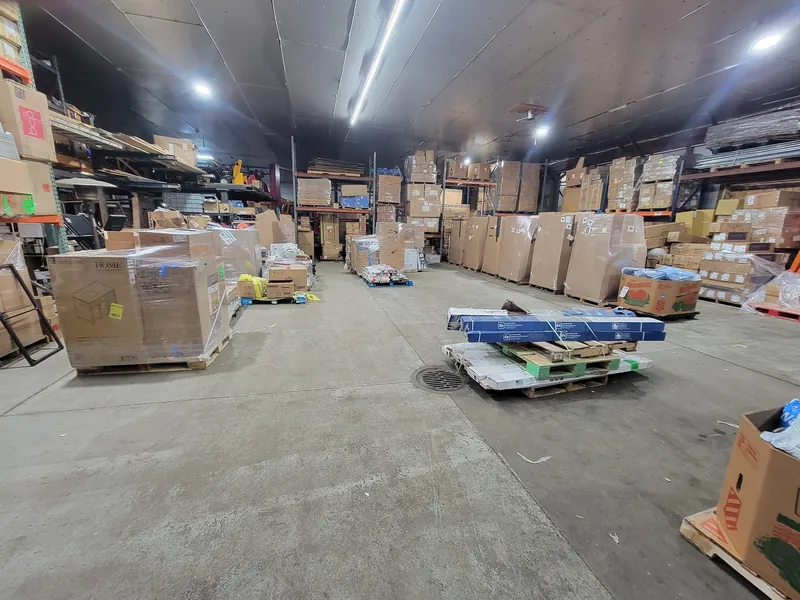
Business model differences matter too. A standalone brick-and-mortar surplus store buys pallets of mixed merchandise and sells it directly to consumers. You go in, you dig through the bins, you find what you find. Online platforms that let you buy liquidation items work differently: you might be bidding on entire pallets or lots without seeing every item first, which adds risk but can produce massive savings if you know what you are doing. Physical discount outlet store locations give you the advantage of inspecting products before you buy, which most individual shoppers should prioritize until they have more experience with the market.
Some liquidation stores specialize. One might focus almost entirely on electronics and appliances. Another might carry mostly clothing and housewares. A few carry food products alongside general merchandise, which brings up a related point: if you are specifically interested in discounted food and grocery items, salvage grocery options in your area work on a similar principle and are worth looking into separately from general liquidation retail.
The Real Benefits of Shopping at Liquidation and Bargain Stores
Let's be direct about the financial side of this first, because that is why most people show up.
Savings at a good discount liquidation store typically run between 30% and 90% off original retail prices, depending on the merchandise category and condition tier. That range is wide, and the low end of it, say 30% off, is not especially exciting compared to a department store sale. But the high end is where things get genuinely surprising. Electronics, appliances, and brand-name clothing frequently appear at 50% to 75% off retail in well-stocked liquidation stores. Some items, especially heavily overstocked goods or items with minor cosmetic damage, go for 80% to 90% off. On a $500 laptop, that math produces a real number that most people would notice.
Small business owners figured this out faster than individual consumers did. Resellers regularly visit bargain stores and overstock stores to buy merchandise in quantity, then sell it through platforms like eBay, Facebook Marketplace, or their own storefronts at a profit. Typically, the margin is not guaranteed and requires knowing your products and your market, but the raw material cost advantage is real. A person who buys liquidation items professionally and knows the space can build a modest business around it.
And honestly, the sustainability angle is not just marketing. It is a real thing.
Every year, enormous quantities of perfectly usable merchandise get destroyed because it is cheaper for a retailer to write it off than to return it or sell it through secondary channels. The National Retail Federation has estimated that returned goods in the U.S. represent over $644 billion in merchandise annually. Some fraction of that gets refurbished and resold. Some goes to liquidation channels. And some gets thrown away. Buying from a discount outlet store or closeout store keeps products in circulation longer, which means fewer manufacturing resources spent producing replacements. It is a genuinely lower-impact way to shop, even if that is not the primary reason most people do it.
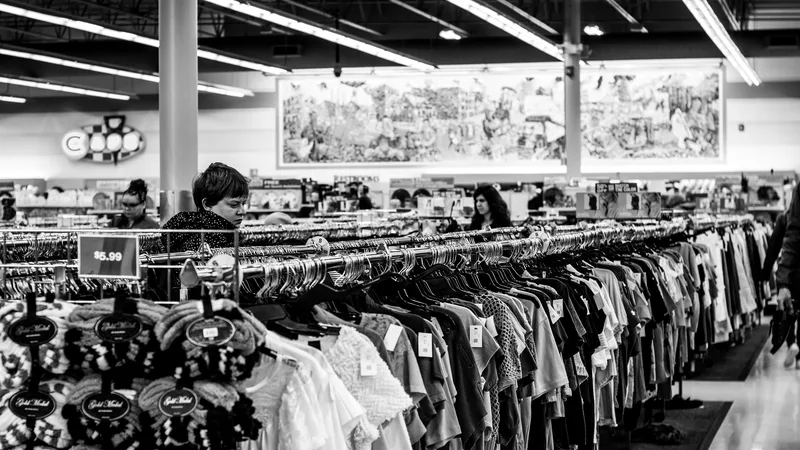
Then there is the experience itself, which is genuinely hard to replicate in traditional retail. Walking into a surplus store is not like walking into a Gap or a Best Buy where the inventory is predictable and orderly. You do not know what you will find. That unpredictability is part of the draw. Inventory at most liquidation stores turns over constantly, sometimes weekly, because stores are always taking in new pallets. A shopper who visited last Tuesday and found nothing interesting might come back Saturday and find a shelf full of name-brand cookware or a stack of unopened Bluetooth speakers. Regular shoppers at these places develop something like a routine, checking back often because the opportunity cost of missing a good find is real.
Product categories at a typical overstock store or closeout store can include electronics, small appliances, clothing, shoes, bedding, toys, cleaning products, tools, sporting goods, cosmetics, and yes, food items. As a rule, the range is part of the appeal. Some people come in for one thing and leave with five others because liquidation stores have a way of surfacing products you did not know you needed.
One thing worth saying directly: the quality at these stores is usually better than people expect going in. That average 4.1-star rating across the businesses in our directory is not a fluke. Shoppers are finding genuine value and coming back to leave positive reviews.
Liquidation Store Shopping by the Numbers: What the Data Shows
Directories and business listings are a useful proxy for where consumer demand is concentrated, and the numbers from Liquidation Store Pal tell an interesting story about who is actually using these stores.
Currently, 13 liquidation store businesses are listed across 5 cities in the directory, with representation in Columbus, Dothan, Elkville, Indianapolis, and Anniston. That spread matters. These are not all major metropolitan areas. Elkville, Illinois is a small town. Anniston, Alabama is a mid-size city with around 20,000 residents. For most shoppers, the presence of active, well-reviewed liquidation businesses in communities like these shows that discount retail stores are not just a big-city phenomenon. Contrary to popular belief, these stores are not concentrated in dense urban cores. They serve communities of all sizes, often because rural and suburban shoppers have fewer competing discount options nearby and these stores fill a real gap.
Most top-rated businesses in the directory are worth looking at specifically:
| Business Name | Location | Rating | Reviews |
|---|---|---|---|
| Ohio Wholesale Liquidation Services | Columbus, OH | 5.0 ★ | 34 reviews |
| KAPS Wholesale Liquidators, LLC | West Monroe, LA | 5.0 ★ | 1 review |
| Southern Illinois Liquidation Outlet | Elkville, IL | 4.8 ★ | 15 reviews |
| Uniontown Liquidation Outlet | Uniontown, PA | 4.7 ★ | 18 reviews |
| The Liquidation Warehouse | South Houston, TX | 4.5 ★ | 52 reviews |
Ohio Wholesale Liquidation Services in Columbus stands out immediately: 5.0 stars across 34 reviews is an exceptionally strong signal. One or two reviews at a perfect rating can be noise. Thirty-four reviews holding at 5.0 means something is consistently going right at that location. Same with The Liquidation Warehouse in South Houston, which has 52 reviews and a 4.5-star average. That is a high volume of feedback for a local business, and the rating held up. Southern Illinois Liquidation Outlet in Elkville pulls a 4.8 across 15 reviews, which is remarkable for a small-town operation with presumably a smaller shopper base drawing from.
Wait, one thing worth clarifying: KAPS Wholesale Liquidators in West Monroe sits at 5.0 stars, but on just one review. That is genuinely encouraging but does not carry the same weight as Ohio Wholesale's 34-review average. Worth keeping an eye on as more reviews accumulate.
Zooming out to the broader industry: $644 billion in returned goods moving through the U.S. system every year is an almost incomprehensible number, and it represents the raw supply feeding every overstock store, bargain store, and closeout outlet in the country. That pipeline is not shrinking. E-commerce return rates run between 20% and 30%, compared to roughly 8% to 10% for in-store purchases. As online shopping grows, the volume of returned merchandise flowing into the liquidation market grows with it. More supply means more selection for shoppers and more competition among surplus stores to offer good prices.
A 4.1-star average across 13 businesses is genuinely good for any retail category. For context, traditional grocery stores average around 3.8 to 4.2 stars nationally. Liquidation stores, which deal in more variable merchandise and less predictable inventory, matching or exceeding that average suggests shoppers are adjusting their expectations appropriately and still coming away satisfied.
How to Find Liquidation Stores Near You (and How to Evaluate Them Before You Go)
Finding a discount liquidation store in your area is easier than it used to be, but it still takes a little more effort than finding a chain grocery store. These businesses do not always have big marketing budgets, and some of the best ones are operating out of warehouse spaces with minimal signage. Here is what actually works.
Search Terms That Get Real Results
Search engines are the fastest starting point. These terms that return the most useful results are "liquidation store near me," "overstock store near me," "surplus store [your city]," and "discount outlet store [your zip code]." "Liquidation sales near me" will sometimes surface one-time events rather than permanent stores, so pay attention to whether a result is a recurring business or a single sale. Google Maps searches work well here because they surface business hours, photos, and reviews in one place.
Business directories are the other main tool. Platforms like Liquidation Store Pal organize listings by city and region, which makes it faster to browse stores near a specific location without wading through unrelated results. Directory listings also tend to include more structured business information than a basic map search: category focus, store type, and links to reviews across multiple platforms. If you are in one of the cities represented in the Liquidation Store Pal directory, starting there before a broader Google search can save time.
How to Evaluate a Store Before You Visit
Not all surplus stores are worth the drive. Some are well-organized, well-stocked, and genuinely customer-friendly. Others are chaotic in a way that makes finding anything a chore, or they carry such a narrow and low-quality slice of the liquidation market that savings are minimal. A few things to check before you make the trip:
- Review volume and average rating: A 4.5-star business with 50 reviews is a much stronger signal than a 4.5-star business with 3 reviews. Look at both numbers.
- What reviewers mention specifically: Reviews that describe specific products found, friendly staff, or clean organization are more useful than vague positive comments. Bad reviews that complain about mislabeled prices or aggressive no-return policies are worth taking seriously.
- Return policy: Many liquidation stores operate on final-sale terms, which is understandable given the nature of their merchandise. But some offer limited returns on items that are significantly misrepresented. Know the policy before you buy a $200 item.
- Specialization: A store that focuses on electronics will have different merchandise, pricing, and condition standards than one that moves mostly clothing or housewares. Checking what category the store emphasizes helps you calibrate expectations.
- Hours and restock schedules: Some bargain stores have specific days when new pallets arrive and inventory is freshest. Calling ahead and asking when new stock comes in is not a weird thing to do. Most staff will tell you.
Parking lots are worth a brief mention here, and yes this is a small tangent. Liquidation stores are often in industrial or strip-mall locations with ample parking, but the loading dock situation can mean the front of the building looks uninviting or even closed. Do not let a plain facade or a shared parking lot with a tire shop throw you off. Some of the best-stocked surplus stores look completely unremarkable from the outside. You almost have to know they are there.
Using Liquidation Store Pal Effectively
Liquidation Store Pal organizes its listings by city and region, so the fastest way to use it is to start with your city or a nearby major city and browse from there. Each listing includes the business name, location, and customer rating, which gives you a quick triage layer before clicking into individual listings for more detail.
Because the directory currently lists 13 businesses across multiple states, including locations in Ohio, Louisiana, Illinois, Pennsylvania, and Texas, it is most useful for shoppers in or near those areas, or for resellers who are willing to travel to buy in quantity. Generally, the directory is growing, and checking back periodically is worthwhile as new businesses are added.
Cross-referencing a directory listing with a Google Maps search and a quick scan of recent reviews gives you a reasonably complete picture of any store before you visit. I would do both rather than relying on just one source.
If you are buying liquidation items with the intent to resell, Ohio Wholesale Liquidation Services in Columbus (5.0 stars, 34 reviews) and The Liquidation Warehouse in South Houston (4.5 stars, 52 reviews) are both worth prioritizing based on review volume and rating consistency. High review counts at strong ratings suggest steady inventory and reliable operations, both of which matter more to resellers than one-time shoppers.
Practical Tips for Getting the Most Out of Your Visit
Knowing where to find a discount liquidation store is only half the equation. What you do once you are inside determines whether you leave with a great deal or a pile of stuff you did not actually need.
Go In With a Loose Plan
Walking into a bargain store without any idea of what you are looking for is a recipe for impulse buying at a moderate discount, which is not the point. Before you go, make a rough list of categories you genuinely need: kitchen items, clothing, tools, whatever it is. This list does not need to be rigid. Staying open to unexpected finds is part of the experience. But