Understanding Liquidation Sales: What to Expect — A Shopper's Real Guide

Two hundred and eleven businesses. That's how many liquidation stores, closeout shops, and surplus outlets are currently listed in the Liquidation Store Pal directory, spread across cities from Omaha to Las Vegas to small-town Ohio, and that number keeps growing. Budget-conscious shoppers are not just looking for coupons anymore. They are showing up at discount liquidation stores on weekday mornings, digging through bins, hauling flat-rate pallets to their cars, and walking out with brand-name goods at prices that would make any regular retailer nervous. Something real is happening here, and if you've never stepped inside one of these places, you're missing out on a genuinely different kind of shopping.

This article is for the first-timer who doesn't know what to expect, the reseller who's curious about sourcing, and honestly anyone who's ever typed "liquidation sales near me" into a search bar at midnight and wondered if it was worth the drive. It covers how these stores actually work, what kinds of products you'll find, what the experience feels like on the ground, and why the numbers behind this industry suggest it's only getting bigger. There are also a few opinions scattered throughout this piece, based on what actually works, not just what sounds good on paper.
What Is a Liquidation Sale and How Does It Work?
A liquidation sale happens when merchandise needs to move fast, usually because a business can't or doesn't want to hold it anymore. Retailers end seasons, manufacturers discontinue product lines, warehouses run out of shelf space, and online retailers process mountains of customer returns every single day. All of that inventory has to go somewhere. Rather than let it sit or destroy it (which some big retailers have been publicly shamed for doing, by the way), companies sell it off in bulk to discount outlet stores, bargain stores, and wholesale liquidators who then resell it directly to the public.
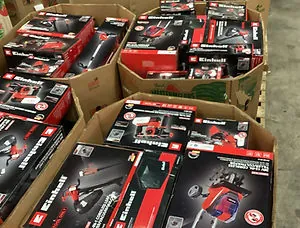
The supply chain for liquidation merchandise is actually kind of fascinating once you start pulling at the thread. At the very top, you have the original retailer or manufacturer. They sell pallets of returned or excess goods to liquidation brokers or directly to discount liquidation stores. Those stores then price everything and put it on the floor, sometimes sorted by category and sometimes just... not. Customer returns are the biggest source. Amazon return pallets alone have become a whole cottage industry. But you'll also see shelf pulls (items pulled from retail shelves to make room for new stock), overstock inventory that never sold, and discontinued product lines being cleared out for pennies on the dollar.
So how is this different from, say, the clearance section at a big-box store? Good question. A clearance rack at Target or Walmart is still curated, still organized, still comes with the store's return policy and customer service infrastructure. A true surplus store or closeout store is operating on a completely different model. Inventory is not predictable. Prices are often set by lot or bin rather than by individual SKU. And the "as-is" nature of the merchandise is much more literal. You are buying what you see, and what you see might have a scuff, a missing battery cover, or a box that's been opened and resealed three times.
That's not a warning to stay away. That's just the deal you're making, and most of the time it's a very good deal.
Liquidation stores are fundamentally different from traditional retail. Inventory changes weekly or even daily. Return policies are often limited or nonexistent. Bring cash if you can, inspect items carefully, and go in with an open mind about what you might find. The less rigid your shopping list, the better your experience will be.
What Types of Products Can You Find at Liquidation Stores?

Short answer: almost anything. Longer answer: it depends enormously on the specific store, the week, and honestly a little bit on luck.
Electronics show up constantly. Headphones, tablets, small appliances, smart home devices, phone accessories, these are some of the most common finds because consumer electronics have incredibly high return rates at major retailers. Home goods are another big category: cookware, bedding, lamps, storage organizers, even the occasional piece of furniture. Apparel is hit or miss depending on the store, but discount liquidation stores that specialize in clothing can yield incredible scores on name brands. Tools are popular. Toys are everywhere, especially right after the holiday season. Groceries and shelf-stable pantry items appear at some overstock stores too, though those are worth examining closely for date codes (more on that in a moment).
One thing that surprises first-timers is how genuinely random the inventory can be. You might walk in on a Tuesday and find a wall of KitchenAid stand mixers. Come back Friday and it's all outdoor furniture and printer ink cartridges. That unpredictability is not a bug. For a lot of regulars, it's the whole point. Shopping at a bargain store like this feels a little like a treasure hunt, and that's not just marketing speak, it's the actual experience of wandering through a place where the stock changes before you can even come back to think about something you saw last week.
Product condition is where you need to pay close attention. Most liquidation merchandise falls into one of these categories: factory new (still sealed, never opened), open-box (returned but appears unused or barely used), refurbished (inspected and repaired to working condition), or gently used (previously owned with some signs of wear). Reputable stores will label these conditions clearly. Some don't. So develop the habit of picking things up, turning them over, checking for cracks, testing buttons if you can, and looking inside boxes to make sure all the parts are there. If a $40 air fryer is missing the basket, it's not actually a deal at $40.
And yes, groceries. If you're interested in discounted food items, that's a whole separate category worth knowing about. Some salvage grocery stores specialize in short-dated, overstock, or slightly damaged food products at steep discounts, if that's something you're curious about, there's a full directory of salvage grocery options worth browsing to find locations near you.
What to Expect When Shopping at a Liquidation Store
Walking into a liquidation store for the first time can feel a little disorienting. Don't be thrown off by it.
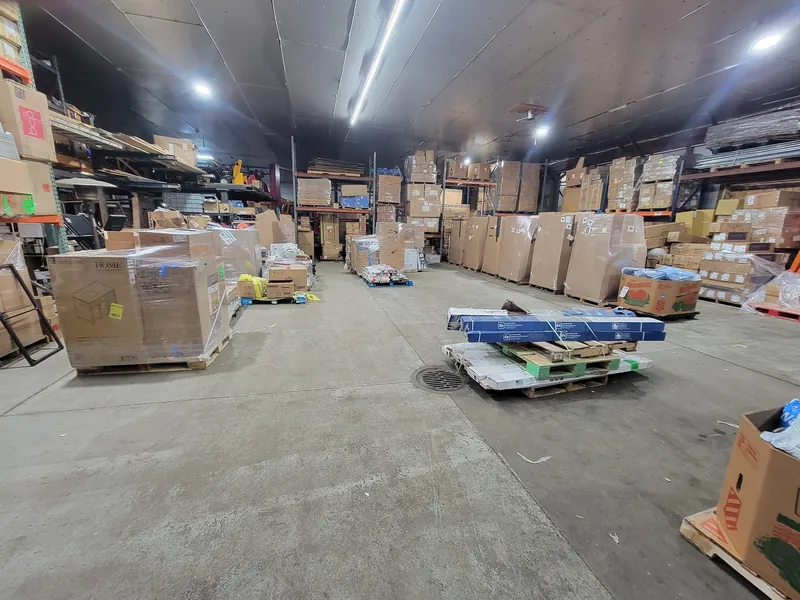
Many of these places look nothing like a conventional discount retail store. Signage might be minimal or handwritten. Products might be grouped loosely by category or just stacked in the order they came off the truck. Some stores use big rolling bins with a flat per-item price, some have organized shelving like a regular store, and others are basically open warehouses where pallets of merchandise sit on the floor and you walk the aisles with a flashlight mentality. In practice, the best ones tend to have a smell: cardboard, a little dust, maybe the faint industrial scent of a loading dock not far from the sales floor. It's not unpleasant. It just tells you you're somewhere real.
Pricing structures at closeout stores and surplus stores vary more than most people expect. Here are the most common ones you'll run into:
- Flat-rate bin pricing: Everything in a particular bin costs the same amount, regardless of what it is. A $3 bin might have phone cases next to kitchen utensils next to random office supplies. These bins are typically refilled throughout the week and sometimes get cheaper as the week goes on.
- Tiered weekly markdowns: Items start at one price on Monday and get marked down by a percentage each day until they're nearly free or the store clears them out. Knowing the markdown schedule at your local store is genuinely useful information.
- Lot-based pricing: Common in wholesale-adjacent stores, this is where you buy a whole pallet or box of mixed goods for a set price without knowing exactly everything inside. Higher risk, potentially higher reward, mostly for resellers.
- Individual item pricing: Some stores price each item separately based on its condition and original retail value, which is closer to what you'd expect from a normal store.
Return policies. This is where people get burned if they're not paying attention. Many liquidation stores sell everything as-is, meaning once you walk out the door, the sale is final. Some stores offer limited exchanges within a few days. A handful have more generous policies, but those are the exception. Do not assume a liquidation store has the same return policy as the retailer where the item originally came from. It doesn't. Read the sign at the register before you buy something you're not sure about.
Warranty coverage is similarly complicated. If you buy a sealed-box appliance at a liquidation store, you may still be able to register it with the manufacturer for warranty coverage, but not always. Manufacturers sometimes void warranties on products sold outside authorized retail channels. Worth checking before you assume that $200 blender comes with any kind of protection.
Honestly, going in with low expectations about policies and high expectations about prices is the right mental setup. These stores are not trying to replicate a Nordstrom shopping experience. They're trying to move merchandise efficiently, and they do that very well.
The Benefits of Shopping at Discount Liquidation Stores
Typically, the savings are real. Thirty to ninety percent off MSRP is the commonly cited range, and in practice, you can absolutely hit both ends of that spectrum. On the low end, you might find a $50 item for $35, fine, but not thrilling. On the high end, you might find a $300 coffee maker in its original sealed box for $45. That second scenario happens more often than you'd think at a good overstock store or discount outlet store, especially if you're shopping regularly and you know the markup schedule.
For resellers, liquidation stores are a sourcing goldmine. Buy a bin of electronics accessories for $20, sort through them, list the working ones on eBay or Facebook Marketplace, and you can realistically triple or quadruple your investment on a good haul. A lot of small reseller businesses run entirely on inventory sourced from places like these. It's not glamorous work, but it works.
There's also an environmental angle that doesn't get talked about enough. When you buy liquidation items, you are quite literally keeping goods out of landfills. Retailers and manufacturers have historically destroyed or discarded unsold and returned merchandise at enormous scale. Every time someone buys a returned item from a bargain store rather than buying new, that's a product that gets used instead of trashed. It's not the reason most people shop at these places, but it's a genuinely good outcome.
And then there's the fun of it. Regular retail shopping is boring in a way that's hard to articulate until you've experienced the alternative. Walking into a store and knowing exactly what's there, exactly what it costs, exactly where it is, that's efficient, sure. But there's no discovery in it. A surplus store gives you something to actually look for. You might come in for a lamp and leave with a label maker, a set of cast iron pans, and a mystery box you paid $8 for that turned out to have a $120 hair dryer inside. Okay, that last one might be a bit optimistic, but it does happen.
Liquidation Stores by the Numbers: Directory Data and Real Results
Liquidation Store Pal currently lists 211 businesses across multiple cities nationwide. As a rule, the average customer rating across all listed businesses sits at 4.4 stars, which is genuinely impressive for a category of store that deals in imperfect merchandise and non-standard shopping experiences. Shoppers are not just tolerating these places, they're rating them well.
Five businesses in the directory have earned perfect 5.0-star ratings, and it's worth knowing who they are if you're trying to find a place worth driving to.
| Business Name | Location | Rating | Reviews |
|---|---|---|---|
| A&R Legendary Sales - Pallet Liquidation | Delta, OH | 5.0 ★ | 114 |
| Woocky Wholesale | Omaha, NE | 5.0 ★ | 60 |
| Ohio Wholesale Liquidation Services | Columbus, OH | 5.0 ★ | 34 |
| Peak Stack Wholesale | Round Rock, TX | 5.0 ★ | 23 |
| Haus Origins Furniture Liquidation Outlet | Vineyard, UT | 5.0 ★ | 22 |
A&R Legendary Sales in Delta, Ohio is the standout by review volume. 114 reviews at a perfect 5.0 is not a fluke, that's a store with a genuinely loyal customer base. If you're anywhere near northwest Ohio, that one's worth making a trip for. Woocky Wholesale in Omaha has 60 reviews and the same perfect score, which suggests a strong local following in Nebraska. Ohio Wholesale Liquidation Services in Columbus, Peak Stack Wholesale in Round Rock, and Haus Origins Furniture Liquidation Outlet in Vineyard, Utah round out the top five, and each of them serves a different product niche, so the strong ratings aren't all coming from the same kind of shopper.
Cities with multiple listings in the directory include Vicksburg, Columbus, Las Vegas, Mooresville, and Indianapolis, each showing at least two businesses. Las Vegas having multiple listings makes sense given the sheer density of commercial activity there. Mooresville, North Carolina having two is a little surprising, but it speaks to how distributed this industry actually is. Discount liquidation stores are not just a big-city thing.
If you're searching for a place to buy liquidation items in your area, the directory is organized to help you search by location. And if you're looking for something more specific, like furniture, electronics, or wholesale lots, many listings include specialty tags so you're not showing up expecting home goods and finding a store full of auto parts.
A 5.0-star rating means a lot more when it's backed by 100+ reviews than when it comes from 4 reviews. Use both numbers together when evaluating a store from the directory. A business with a 4.3 average across 200 reviews is probably more reliable than a 5.0 from 6 reviews.
Frequently Asked Questions
Are liquidation store products safe to buy?
Generally yes, but it depends on the product category. Electronics and appliances should be inspected carefully for physical damage before you buy. Cosmetics and personal care products from liquidation sources are worth extra scrutiny, check expiration dates and packaging integrity. Food items, if sold, should always be checked for date codes and proper sealing. Most reputable discount liquidation stores do basic quality checks before putting items on the floor, but not all do, so your own inspection matters a lot.
Can I return items bought at a liquidation store?
Often no, or only under limited conditions. Many liquidation and surplus stores sell everything as-is with no returns accepted. Some offer exchanges or store credit within a short window (3 to 7 days is common). A few have more generous policies. Always ask before you buy, and look for the return policy posted near the register. Do not assume anything.
How do I find a liquidation store near me?
Searching "liquidation sales near me" or "discount liquidation store" in a search engine is a decent start, but results can be inconsistent. Using a dedicated directory like Liquidation Store Pal gives you vetted listings with real customer ratings, so you're not driving somewhere that closed six months ago or ended up being a scam operation. For most shoppers, the directory currently lists 211 businesses across the country.
What's the difference between a liquidation store and a thrift store?
Thrift stores primarily sell donated secondhand goods, usually to benefit a charitable organization. Liquidation stores and closeout stores sell new, returned, or overstocked merchandise from retailers and manufacturers. Most items at a liquidation store are often in much better condition and were originally sold at full retail price recently. These shopping experience and pricing model are quite different, though both can offer strong value.
Is liquidation shopping worth it for resellers?
Yes, for many people it's their primary sourcing strategy. Buying liquidation items in bulk, especially through lot-based or pallet pricing, can yield significant margins when items are sorted and resold individually online. It requires time, storage space, and some knowledge of what sells well on platforms like eBay, Amazon, or Facebook Marketplace. But the model works, and plenty of small reseller businesses are built on it entirely.
Do liquidation stores restock regularly?
Yes, and often. Most good overstock stores and bargain stores receive new shipments multiple times per week. Because of this, it pays to visit frequently rather than once in a while. Many regular shoppers go to their favorite liquidation store on a set day each week when they know new stock has arrived. Some stores even post restock schedules on social media, which is worth following if you find a place you like.
Liquidation shopping rewards the patient, the curious, and the organized. Show up early, bring cash, know your prices well enough to spot a real deal, and don't get attached to finding any one specific thing. Generally, the best finds are the ones you weren't looking for. And with 211 businesses listed and an average rating of 4.4 stars across the board, there's a good chance a solid store is closer to you than you think.
More Ways to Save
Find Liquidation Stores Near You
Browse our directory of 211+ businesses, from closeout stores and overstock