What is a Discount Liquidation Store? A Beginner's Guide

You've probably driven past a storefront with hand-painted signs promising "70% OFF EVERYTHING" and wondered whether it was legit or just some kind of trap. Maybe you walked in once, felt overwhelmed by the chaotic shelves and mismatched boxes, and walked back out without buying anything. Or maybe a friend told you they scored a brand-new blender for four dollars and you still don't quite believe them. If any of that sounds familiar, you're in the right place.

A discount liquidation store is exactly what it sounds like: a retail shop that sells goods acquired through the liquidation process, usually at a steep discount compared to what you'd pay at a regular store. These places go by a lot of names. You might hear them called a bargain store, a closeout store, an overstock store, or a surplus store. Some people just call them "the liquidation place." The inventory comes from all over: retailers that need to clear shelf space, warehouses sitting on too much product, manufacturers with excess production runs, and online sellers dealing with mountains of customer returns. All that stuff has to go somewhere, and a discount liquidation store is often where it ends up.
These stores have grown a lot in popularity over the last decade, and it's not hard to see why. People want their money to stretch further. Shopping habits shifted. And frankly, once you find a good liquidation deal, it's hard to go back to paying full retail. This guide will walk you through how these stores work, what you can expect to find, how to shop smart, and how to locate liquidation sales near me (or near you, wherever you happen to be).
How Discount Liquidation Stores Work
Picture the supply chain as a river. Products flow from a manufacturer to a distributor to a retailer, and eventually to a customer. But sometimes the flow gets backed up. A big-box retailer orders too much of a seasonal item and can't sell it all. An online store processes thousands of returns every week and doesn't have the staff or space to restock each one. A warehouse closes down. A brand discontinues a product line. All of that inventory needs to exit the system fast, and selling it at a major discount to a liquidation buyer is usually the quickest, cleanest way to do it.
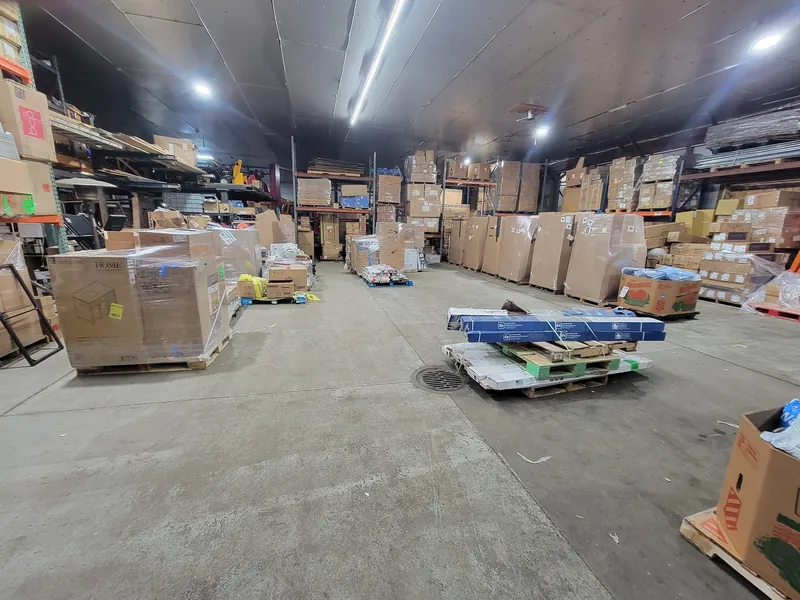
Liquidation buyers, which is basically what a discount liquidation store owner is, purchase these goods in bulk, often by the pallet or truckload. They're not cherry-picking individual items; they're buying whole lots, sometimes without knowing exactly what's inside. That cost savings gets passed along to shoppers in the form of seriously low prices. It's a pretty elegant system when you think about it.
Now, it's worth drawing a clear line between a discount liquidation store and a standard discount retail store like a dollar store or a budget-focused chain retailer. A regular discount retail store sells new, purpose-purchased merchandise that was always intended for that price point. A liquidation or closeout store is selling merchandise that had a different original destination, which is why the deals can be so extreme. You might find a $120 power drill selling for $22. That drill wasn't made to sell for $22; it just ended up there through the liquidation pipeline.
Different stores source inventory in different ways. Some focus exclusively on customer returns from major online retailers. Others specialize in shelf pulls, which are items pulled from retail store shelves to make room for new stock but have never actually been used by a customer. Some carry true overstock, meaning brand-new products that simply weren't sold in time. Many stores carry a mix of all of the above.

Types of Merchandise You Can Find at a Liquidation Store
Walk into a well-stocked surplus store on a good day and you might find almost anything. Electronics are big, things like smart speakers, tablets, kitchen appliances, and power tools. Clothing is extremely common, often brand-name stuff still in original packaging. Home goods show up constantly: cookware, bedding, décor, small furniture. Toys, sporting goods, baby products, automotive accessories. Some stores even carry food items and cleaning supplies.
Honestly, the range can be startling. One section might look like a hardware store, the next like a clothing boutique, the next like a home improvement aisle. It's eclectic in a way that traditional retail just isn't.
One thing beginners really need to understand is the concept of condition grades. Not everything in a liquidation store is new. Products are generally sorted into a few categories:
- New / Sealed: Never opened, original packaging intact. These are usually overstock or shelf-pull items.
- Like-New / Open Box: Opened but unused or barely used. Often customer returns where the person just changed their mind.
- Tested / Working: Used or returned items that have been checked and confirmed functional.
- Salvage / As-Is: Items sold with no guarantee of functionality. These might be damaged, missing parts, or otherwise compromised. Price reflects that.
A good discount liquidation store will label items clearly by condition. Not all of them do, which is why inspecting things yourself before you buy is so important. More on that in a bit.
One of the most interesting things about these stores is the inventory turnover. A truckload of merchandise comes in, gets priced and shelved, and within days it might be half gone. Come back a week later and the store looks completely different. For bargain hunters, that unpredictability is actually part of the fun. You never really know what you're going to find. For people who want consistency and predictability in their shopping, it can be frustrating. That tension is just part of the deal when you buy liquidation items.
If you're someone who also keeps an eye out for grocery-type deals while you're bargain shopping, it's worth knowing that some liquidation-adjacent stores specialize specifically in food products. Salvage grocery options in your area can be a goldmine for discounted pantry staples, and they operate on a similar model to general liquidation stores.
The Benefits of Shopping at a Discount Liquidation or Surplus Store
Let's talk about the obvious one first: the prices. Savings at a genuine discount liquidation store commonly range from 30% to 90% off original retail prices. That's not a typo. Ninety percent. On a $300 item, that could mean paying $30. Now, those extreme discounts usually apply to salvage or heavily marked-down overstock, but even the more modest savings of 40% to 60% off are genuinely significant for household budgets.
Beyond just saving money, there's something genuinely satisfying about finding a product you needed anyway, maybe a brand-name item you'd been putting off buying, at a fraction of the price. People who shop at these stores regularly will tell you it changes how you think about spending. Why pay full retail for something when it might show up at the closeout store in a few weeks?
There's also an environmental angle that doesn't get talked about enough. All that overstock and returned merchandise that flows into liquidation stores would otherwise end up in landfills or destroyed (yes, some major retailers actually destroy unsold goods rather than discount them). Buying from a surplus store keeps usable products in circulation. That's a real benefit, even if it's not the main reason most people walk through the door.
For resellers and small business owners, these stores are a serious resource. A lot of people buy liquidation items in quantity and resell them on platforms like eBay, Facebook Marketplace, or at flea markets. The margin potential is real. Someone who knows what to look for can buy a mixed pallet of electronics for a few hundred dollars and resell individual items for two or three times what they paid. It's not a guaranteed income stream, but it's a legitimate model that many small operators use successfully.
Supporting local business is another angle worth mentioning. Many discount liquidation stores are independently owned operations, not chains. When you shop there, you're putting money into a local business owner's pocket, which has a different economic ripple effect than shopping at a national retailer.
Discount Liquidation Stores by the Numbers, Industry Data and Directory Insights
To get a sense of just how many of these stores exist, consider the data from the Liquidation Store Pal directory: 211 businesses listed across multiple cities in the United States. That's a meaningful slice of the industry represented in one place. And what really stands out is the average customer rating across those 211 listed businesses: 4.4 stars. For a shopping category that gets stereotyped as chaotic or unreliable, that's a strong signal that most people who visit these stores come away satisfied.
Cities represented in the directory include both large metro areas and smaller communities. Las Vegas and Indianapolis are on the list, which makes sense for big-city coverage. But Vicksburg, Columbus, and Mooresville also show up, each with 2 listings. That mix matters because it shows you don't have to live in a major metropolitan area to find a decent discount outlet store nearby.
Some of the top-rated businesses in the directory are worth calling out specifically, because perfect 5.0 ratings are rare in any industry:
| Business Name | Location | Rating | Reviews |
|---|---|---|---|
| A&R Legendary Sales - Pallet Liquidation | Delta, OH | 5.0 ★ | 114 |
| Woocky Wholesale | Omaha, NE | 5.0 ★ | 60 |
| Ohio Wholesale Liquidation Services | Columbus, OH | 5.0 ★ | 34 |
| Peak Stack Wholesale | Round Rock, TX | 5.0 ★ | 23 |
| Haus Origins Furniture Liquidation Outlet | Vineyard, UT | 5.0 ★ | 22 |
A&R Legendary Sales in Delta, Ohio has 114 reviews at a perfect 5.0. That's not a fluke. That kind of review volume at that rating takes consistent, repeated positive experiences from real customers. Worth noting that Delta, Ohio is a small town, not a major city, which again shows these stores aren't just an urban phenomenon.
Before you drive out to any discount liquidation store, check its ratings and read a few recent reviews. An average of 4.4 stars across 211 businesses is the industry benchmark. If a store you're considering is sitting at 3.0 or below with recent complaints about misrepresented merchandise, keep looking.
Tips for Shopping Smart at a Bargain or Closeout Store
Okay, this is where a lot of first-timers go wrong. They walk into a discount liquidation store, see prices that seem impossibly low, and start loading up a cart without thinking. Then they get home and find out that half of what they bought doesn't work, doesn't fit, or they simply didn't need. Happens all the time.
Inspect everything you can before buying. For electronics, ask if there's a testing station or power outlet available. A lot of stores will let you plug something in. For clothing, check for stains, tears, or missing buttons, especially on open-box or returned items. For tools and appliances, look for damage to cords, housing, or moving parts. If something is marked "as-is" or "salvage," price it accordingly in your head before deciding whether it's worth the gamble.
Understand the return policy before you spend anything. Many liquidation stores operate on a strict no-return, all-sales-final basis. That's completely normal for this type of retail, but it means you really do need to make your buying decisions carefully in the moment. You usually can not change your mind later.
Visit often and visit early. Inventory at a good surplus store turns over fast. Many stores receive new merchandise on specific days of the week, and regulars know to show up early on those days. If you ask a staff member when new stock arrives, most of them will just tell you. Simple as that.
Bring cash if you can. Some smaller liquidation stores prefer it or will offer a small additional discount for cash transactions. Not universal, but common enough to be worth knowing.
One more thing that sounds obvious but trips people up constantly: check the price against retail before you get excited. Pull out your phone and look up the item. A $40 price tag feels like a steal until you realize the item retails for $45. Not every "deal" at a closeout store is actually a deal. Do your homework right there in the aisle.
And please, do not buy things just because they're cheap. This is the single most common mistake at bargain stores. You don't need twelve sets of dish towels because they're fifty cents each. Buying things you don't need, even at very low prices, is still spending money you didn't have to spend.
How to Find a Discount Liquidation Store Near You
Finding liquidation sales near me used to require local knowledge or stumbling across a storefront by accident. That's changed. Online directories like Liquidation Store Pal now list 211 businesses across the country, making it straightforward to find a vetted, reviewed discount liquidation store wherever you are.
Google searches work too. Searching terms like "surplus store near me," "closeout store," or "overstock store" will surface local options. But raw Google results don't filter by quality or give you a curated sense of which stores are worth your time. That's where a directory with verified listings and genuine customer ratings earns its value.
Community recommendations are underrated. Facebook neighborhood groups, Reddit threads, and local forums are full of people who know exactly which discount outlet store in their area has the best inventory and which ones to skip. If you can find someone who shops at these places regularly, ask them. That word-of-mouth intel is often better than any search result.
When evaluating a store you haven't visited before, look at the volume of reviews, not just the rating. A store with a 4.8 rating from twelve reviews is less reliable than one with a 4.4 rating from two hundred reviews. Also read the critical reviews, not to be scared off, but to understand what the legitimate complaints are. Consistent complaints about misrepresented item conditions or unhelpful staff are red flags. Complaints about a crowded parking lot on weekends? That's actually a good sign, it means the store is popular.
Parking lots at these places are often chaotic, by the way. I've seen liquidation store parking lots that look like a flea market exploded: people loading pallets into pickup trucks, flatbeds, vans with no back seats. It's part of the scene.
For your first visit to any new discount liquidation or surplus store, go without a specific shopping list. Just explore. Get a sense of how the store organizes its merchandise, what condition grades it uses, and what product categories it tends to carry. That first visit is research. Your second visit is when you can shop with more confidence and intention.
With 211 businesses listed and an average customer rating of 4.4 stars, the Liquidation Store Pal directory is one of the most reliable ways to find a trusted discount liquidation store in your area. Search by city, read real customer reviews, and find stores that have earned their reputation over time.
Frequently Asked Questions
What exactly is a discount liquidation store?
A discount liquidation store is a retail shop that sells merchandise acquired through the liquidation process, meaning goods that come from overstock, customer returns, shelf pulls, warehouse closeouts, and similar sources. These items are sold at prices significantly below original retail, often ranging from 30% to 90% off. They're also called bargain stores, closeout stores, surplus stores, or overstock stores depending on the region and the specific type of inventory they carry.
Is the merchandise in liquidation stores used or damaged?
Not necessarily. Inventory ranges from brand-new sealed items (overstock that was never touched) to open-box returns to genuinely damaged salvage goods. Most stores grade their inventory by condition, and understanding those grades before you shop is important. Always inspect items when possible, especially anything in the open-box or as-is category.
Can I return items I buy at a liquidation store?
Most discount liquidation stores operate on an all-sales-final policy, meaning no returns. This is standard for the industry because of the nature of the inventory. Before buying anything, ask the store about their specific policy. A few stores do offer limited returns on new or sealed items, but do not count on it.
How do I find a good liquidation store near me?
Online directories like Liquidation Store Pal list 211 businesses across the country with verified customer ratings averaging 4.4 stars. Google searches using terms like "closeout store near me," "surplus store," or "liquidation sales near me" can also surface local options. Community recommendations through local Facebook groups or neighborhood forums are often the most reliable source of firsthand intel about which stores are worth visiting.
Are liquidation stores good for resellers?
Yes, and many resellers specifically target these stores as a sourcing strategy. Buying liquidation items in bulk, especially by the pallet, and reselling individual items on platforms like eBay or Facebook Marketplace can be profitable if you know what you're buying. It requires research, patience, and the ability to assess item value quickly, but it is a legitimate business model used by many small operators.
What kinds of products can I find at a liquidation store?
Almost anything. Common categories include electronics, clothing, home goods, kitchenware, tools, toys, sporting goods, baby products, and sometimes food or grocery items. Inventory varies widely between stores and changes constantly as new stock comes in. Part of the appeal is the unpredictability.