Before You Buy Anything, Put Your Hands On It First

You've probably been there. You grab something off a shelf, it looks fine from a distance, you get home, and then you notice the cracked hinge, the missing piece, the faint but unmistakable smell of water damage. At a regular retail store, you'd return it without much trouble. At a liquidation store, that's often not an option. Most of these places sell everything as-is, and that's part of the deal that makes the prices so good. But it also means the burden falls on you to catch problems before the money leaves your wallet.

That's exactly why physically inspecting merchandise before you buy is not just good advice. It's the whole game.
What You're Actually Looking At When You Walk In
Liquidation stores carry returned goods, overstock, shelf pulls, and sometimes items from store closures. Each of those categories comes with its own set of risks. A returned item might work perfectly fine, or it might be missing three screws and a power cord. Overstock is usually the safest bet, since those products were never opened. But you still want to confirm the seal is intact.
Walk in with your eyes open. Seriously, slow down near the entrance and take a look at how the store is organized, because that tells you a lot about how carefully stock is handled. Are items sorted loosely by category, or are they just piled in bins? Both setups can yield great finds, but they require different strategies.
Pick up the item. Turn it over. Look at every seam, every corner, every port or opening. For electronics, check that the screen has no cracks and the buttons aren't stuck. For kitchen appliances, look inside the cavity and sniff. Odd as that sounds, a slight burnt odor can mean the unit was returned after a malfunction. For clothing and linens, hold them up to the light near a window if you can find one.
And here's a thing that catches people off guard: the outside of the box is not a reliable indicator of what's inside. A pristine box can contain a damaged item that someone carefully repackaged before returning it. Open the box right there in the aisle if the store allows it, and most do.
What to Actually Check, Item by Item
Different categories need different attention. You cannot inspect a blender the same way you inspect a jacket.
For small electronics and gadgets, look for physical damage first. Cracked screens, bent charging ports, missing battery covers. Then check whether the item powers on if there's a test station available. Some liquidation stores have power strips set up specifically for this. Not all of them do, so if you're planning to buy something that relies on a working motor or display, go on a day when you have time to ask staff for help testing it.
For tools and hardware, check moving parts. A drill with a chuck that wobbles, a saw with a dull or chipped blade, a level with a cracked vial. These are the kinds of defects that are invisible in a photo but obvious the moment you handle the thing. Run your hand along edges carefully. Check that cords are not frayed near the plug, because that's both a quality issue and a safety one.
Furniture and home goods deserve extra scrutiny. Press on joints. Wobble the frame. Open and close any drawers or doors. Look underneath and behind, not just at the front face. Particle board furniture is especially prone to swelling or splitting when it's been in a warehouse or exposed to moisture, and that kind of damage is easy to miss if you only look at the surface.
Clothing is simpler but still worth doing right. Check seams, check zippers, look for stains near collars and underarms. Hold knits up to the light to spot thin spots or snags that aren't immediately visible at first glance.
Using the Store's Setup to Your Advantage
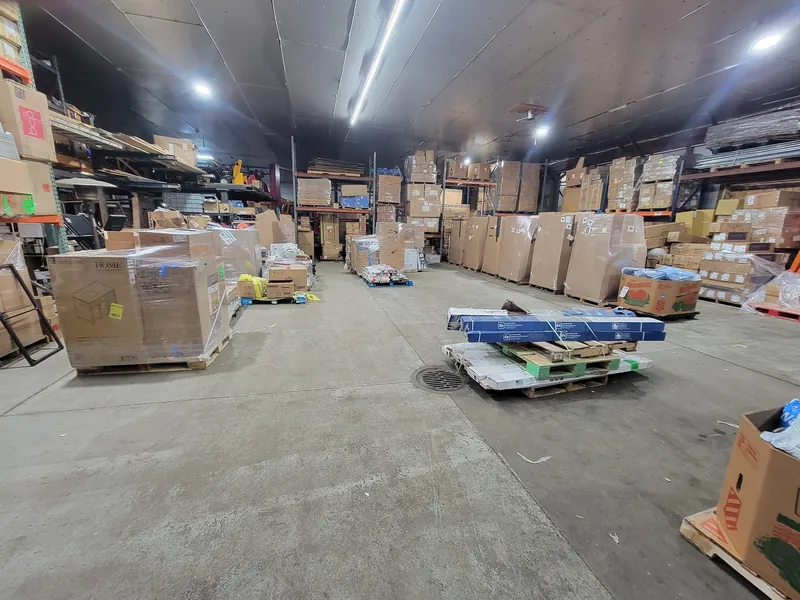
Liquidation Store Pal has 247+ verified listings, and across those stores, the experience can vary quite a bit in terms of lighting, organization, and how accessible items are for inspection. Some locations are bright and well-sorted. Others are dimly lit warehouse-style spaces with bins you're digging through. Bring a small flashlight on your phone if you're heading somewhere for the first time. That sounds like overkill until you're trying to read a label in a poorly lit back corner.
Ask staff questions directly. Most liquidation store employees are not on commission and have no particular reason to oversell you on anything. If you ask whether an item has been tested or whether the store accepts returns on electronics, you'll usually get a straight answer. A good staff member will tell you upfront if something came in with a noted defect.
Also, notice how items are tagged. Some stores mark items with color-coded stickers that indicate condition grades. A "B" or "C" grade sticker is a signal to look even more carefully, not a reason to skip the item entirely. Priced accordingly, a grade-C item can still be worth buying if the flaw is minor and cosmetic.
Wait, that is not quite right to say "cosmetic flaws are always fine." A cosmetic flaw on a lamp is one thing. A cosmetic flaw on a helmet or a car seat is a different story entirely. Know the category you're buying in before you decide how much imperfection is acceptable.
Making the Habit Stick
The first few times you inspect items carefully, it feels slow. You're standing in the aisle longer than you planned, turning things over, squinting at seams. Other people are breezing past grabbing things without a second look.
But here's what tends to happen after a few visits: you get fast. You develop a quick mental checklist that runs almost automatically. You stop looking at every inch of everything and start knowing exactly where problems hide on specific types of products. A good eye for liquidation merchandise is genuinely something that improves with practice.
And the payoff is real. Buying a $40 blender that works perfectly because you took 90 seconds to check it out feels completely different from buying a $15 blender that breaks on day two because you didn't notice the cracked base.
Go in with a plan, take your time with the items that matter, and don't let the excitement of a low price tag rush you past the most important step. Physical inspection is the one thing no app or photo can do for you. It's yours to do, right there in the store, before you commit.
That habit, more than any coupon or timing trick, is what separates people who consistently find great deals from people who occasionally get burned. Build it early, and these stores start