Every Store in This Directory Had to Prove It Was Legal to Operate

You pull up to a liquidation store you found online. The sign looks a little rough. There's no clear business name on the door, just a hand-lettered placard in the window. You're not sure if this place is legit or if you're about to hand cash to someone running a pop-up out of a rented warehouse with no oversight whatsoever. It's an uncomfortable feeling, and it happens more than you'd think in this space.

That's the exact problem that verified business licensing is meant to solve. Every store listed on Liquidation Store Pal has had to show proof of a valid business license before getting added to the directory. Not a promise. Not a checkbox. Actual documentation.
Why Unlicensed Liquidation Stores Are a Real Problem
Liquidation retail attracts a certain amount of fly-by-night operators. That's not an exaggeration. Because the barrier to entry can look low from the outside (find a supplier, rent a space, put stuff on tables), some people try to run these businesses without ever registering properly with their city or county.
No license means no accountability. If something goes wrong with a purchase, you have almost no recourse. There's no registered business entity to file a complaint against. The Better Business Bureau can't help you if there's no record of the business existing. And honestly, if a store isn't licensed, you have to wonder what else they're skipping.
It's also worth knowing that business licenses are tied to a physical address. A licensed store has a verifiable location on record with local government. That alone filters out a huge number of sketchy operations that move around or disappear after a few weeks.
In many states, operating a retail business without a valid license is a misdemeanor. Not a technicality. An actual legal violation. And yet it happens constantly in the discount and liquidation space because enforcement is inconsistent and shoppers often don't know to ask.
What "Verified" Actually Means Here
Verified does not mean self-reported. That distinction matters.
Plenty of directories let stores create a profile and check a box that says "licensed and insured." Liquidation Store Pal requires stores to provide proof. That means a copy of an active, current business license issued by the appropriate government authority. Not expired. Not from three years ago. Current.
Okay, here's something most people don't realize: business licenses have renewal dates, just like a driver's license. A store that was legitimate in 2021 might not have renewed. Requiring current documentation catches that. It's a small thing that makes a surprisingly big difference in practice.
With over 247 verified listings across the directory, this standard has been applied consistently. Every single one of those stores went through the same documentation step. That's not a light lift for the directory team, and it shows.
From a shopper's standpoint, here's what you can actually do with this information. Before visiting any store, check its listing page. If it's on Liquidation Store Pal, the verification process has already happened. You can walk in knowing the baseline requirement was met. That's a real time-saver when you're trying to decide between three stores in the same area.
What a License Tells You (and What It Doesn't)
A business license is not a quality rating. Let's be clear about that.
It means the store is legally registered to operate. It does not mean the inventory is great, the prices are fair, or the staff is helpful. Those things get sorted out by the rating system, where the directory average sits at 4.4 stars across all verified listings. Licensing and ratings work together. One tells you the store is legitimate. The other tells you if it's worth your time.
Think of it as a two-step filter. Step one: is this a real, registered business? Step two: do other shoppers like it? You want both answers to be yes before you drive across town on a Saturday morning.
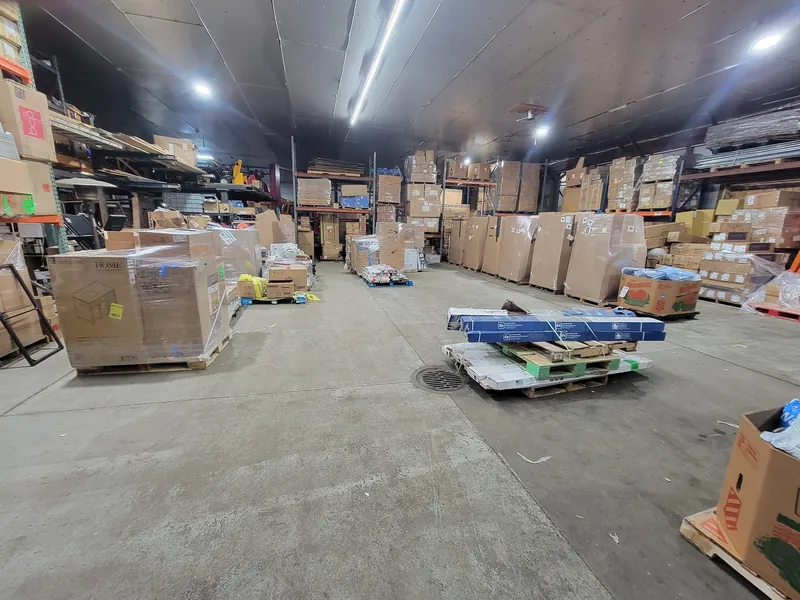
Something I've noticed in liquidation stores specifically: the ones that are properly licensed tend to have better-organized layouts too. Weird correlation, but it tracks. If an operator bothered to get their paperwork in order, they usually bothered to sort their pallets as well. You'll often find clearly marked bin sections, posted pricing, and actual receipts at checkout. In practice, the messy, chaotic stores with no visible pricing? Those are frequently the ones with licensing questions too.
A license also tells you the store has a registered owner on record. If you have a dispute about a purchase, you have a name and address to work with. That's not nothing. That's actually quite useful if you buy something expensive and it turns out to be misrepresented.
How to Use This Standard When Picking a Store
Start with the directory filter. Don't just browse the full list. Use verified status as your first cut, then look at ratings, then look at location.
Check the listing date and any recent reviews. A store that was licensed two years ago and has no recent activity might have changed hands or let things lapse. Recent positive reviews are a good signal that the business is still actively operating under the same ownership.
Call ahead before your first visit. This sounds old-fashioned, but it works. A quick phone call tells you if someone answers, how they talk about their inventory, and whether the hours listed are actually accurate. Lots of liquidation stores update their hours inconsistently online. I'd rather spend 90 seconds on the phone than show up to a closed door.
And if you ever visit a store that claims to be listed on Liquidation Store Pal but feels off, something doesn't add up, report it. Typically, the verification process is only as good as its ongoing maintenance. Flagging a store that seems to have let its license lapse helps keep the directory accurate for everyone else looking after you.
Licensing verification is not a glamorous feature. It won't show up in a store's Instagram feed or get mentioned in a sale announcement. But it's the kind of standard that separates a trustworthy directory from a list of random addresses, and it matters every time you decide where to spend your afternoon and your money.