What to Look for in Overstock Items: A Practical Buying Guide That Could Save You 40–70%

Most people walk past a liquidation store assuming the merchandise is junk. The data tells a different story. Across 211 businesses in our directory, the average customer rating sits at 4.4 stars, and five separate stores have earned a perfect 5.0, including A&R Legendary Sales in Delta, OH with 114 reviews, and Woocky Wholesale in Omaha, NE with 60 reviews. These aren't flukes. Buyers who know what they're doing are finding genuinely good merchandise at prices that retail stores cannot touch, and they keep coming back.

Overstock, closeout, and liquidation items all end up at discount stores through different supply chain paths, and each path carries its own quality profile. This guide covers what those differences are, what to inspect before you buy, how to spot a genuinely good deal, and which red flags should make you put the item back on the shelf. If you've ever wondered whether buying liquidation items is worth the risk, the answer is yes, but only with the right checklist in your pocket.
1. Understanding the Overstock and Liquidation Marketplace
Inventory ends up at a discount liquidation store through a few different channels, and understanding those channels changes how you evaluate what you're holding. Manufacturers overproduce. Retailers over-order. Seasons change. A department store chain decides to drop a product line, and suddenly there are 40,000 units of something perfectly good sitting in a warehouse with nowhere to go. That's where surplus stores, closeout stores, and overstock stores step in, buying that inventory in bulk at a fraction of its original wholesale cost, and passing some of that savings on to you.
There are three main categories of goods you'll find in these stores, and they are not the same thing. Overstock items are excess inventory that was never sold at retail, meaning the product is typically brand new, never touched by a consumer. Closeout items are discontinued lines, products a brand or retailer decided to stop carrying, which may be perfectly functional but won't get restocked anywhere after this. Returned merchandise is the most variable of the three. Some returns are opened-box items in near-perfect condition returned because someone changed their mind. Others were returned because something was wrong. A good bargain store will label these differently. A less careful one will throw them all in the same bin.
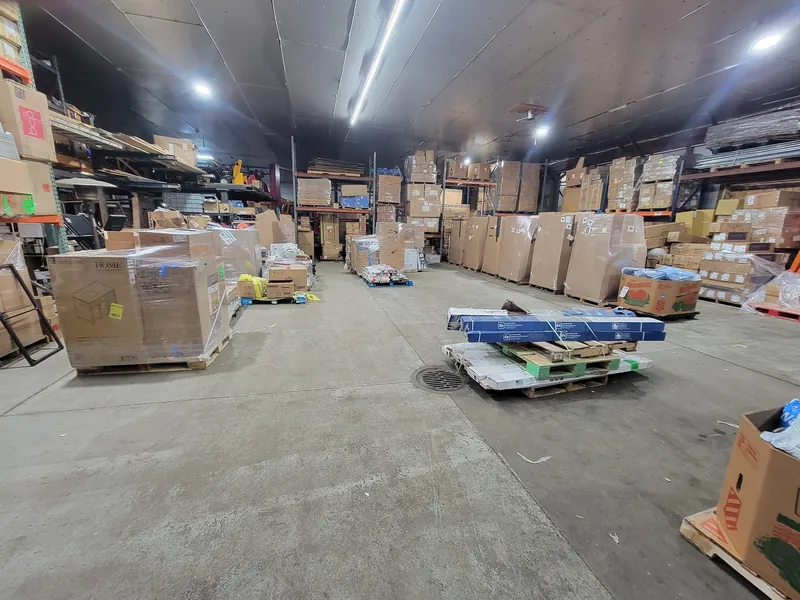
Liquidation sales, both in-store and online, work on volume. A discount outlet store or surplus store buys pallets of goods, sometimes without a detailed manifest, sometimes with one. They price items to move fast, which is why the deals can be real. But that same speed-over-scrutiny model is also why you need to do your own inspection rather than assuming the price reflects the condition. Online liquidation auctions in particular can be tricky since you're bidding on photos rather than handling the actual product. In-store shopping at a local overstock store or discount retail store gives you a major advantage: you can touch it, open it, and ask questions before you spend anything.
Search "liquidation sales near me" or "discount liquidation store" in our directory before you drive anywhere. Cross-reference the store's listed specialties, some focus on electronics, others on furniture or grocery surplus, so you're not wasting a trip to a store that doesn't carry what you need.
2. The Overstock Item Evaluation Checklist: What to Inspect Before You Buy

Packaging integrity is your first filter, and it takes about 15 seconds to check. A sealed box in good condition is a strong positive signal. But open-box is not automatically disqualifying. What you're looking for is whether the box was opened intentionally and carefully (like a return or a repack) versus whether it's crushed, water-stained, or taped shut with generic tape in a way that suggests something happened. Crushed corners on electronics boxes raise the chance of internal damage. Water staining on any box, especially appliances or electronics, should be an immediate pass. Repackaging sometimes happens legitimately when a store opens a unit to verify contents, but you should verify those contents yourself before assuming anything.
Product condition grading matters a lot, and these stores use terms that sound official but can mean different things depending on who's labeling the item. Here's what the common grades actually mean in practice at most discount retail stores and surplus stores:
- New / Factory Sealed: Never opened, original seal intact. Highest value, lowest risk.
- Like New / Open Box: Opened but unused or barely used, typically all parts present. Good value if verified.
- Shelf Pull: Removed from retail shelves, never purchased by a consumer, may show minor shelf wear. Usually excellent condition.
- Refurbished: Repaired or restored to working condition, often with a limited warranty. Risk depends heavily on who did the refurbishing.
- Customer Return: Widest condition range of any grade. Could be perfect, could be broken. Always inspect carefully.
- As-Is / Parts Only: Non-functional or incomplete. Only buy this if you know exactly what you're doing with it.
Component completeness is the thing most buyers skip and later regret. A $40 blender that's missing the lid gasket is not a $40 blender. It's a $40 project. Before buying anything with multiple parts, pull up the manufacturer's product listing on your phone (Amazon, the brand's website, wherever) and check what should be in the box. Cords, remotes, mounting hardware, manuals, calibration tools, batteries, all of it matters, especially if you plan to resell. At a good overstock store or closeout store, staff will often tell you what's missing if you ask directly. At busier discount liquidation stores, you're largely on your own.
☐ Packaging is sealed or clearly labeled as open-box
☐ All original components are present (verify against manufacturer listing)
☐ Condition grade matches what you can see on the product
☐ No signs of liquid damage, mold, heavy wear, or burn marks
☐ Product is functional or testable in-store if allowed
☐ Return or exchange policy is understood before you pay
And yes, ask about the return policy every single time. Some overstock stores offer 7-day returns on electronics. Others are strictly all-sales-final. This changes your risk calculation entirely.
3. Quality Indicators: How to Spot a Genuinely Good Deal
Brand recognition is a legitimate starting filter, not just brand snobbery. At a discount liquidation store or surplus store, a KitchenAid mixer with a dented box is almost certainly still a KitchenAid mixer inside. An off-brand stand mixer with no dents might be a much worse product. Well-known brands have established quality standards, and more importantly, they have parts ecosystems and customer service lines you can contact if something goes wrong. Warranty support on overstock items varies, but many manufacturers will honor their warranty on a sealed or shelf-pull unit regardless of where you bought it, as long as you have proof of purchase and the serial number is intact.
Shelf pulls are the best-kept secret in any overstock store or bargain store. These are products that sat on a retail shelf, were never bought, and were pulled when the retailer stopped carrying them. No consumer ever touched them. They often have minor cosmetic issues like a shelf-edge price sticker or slight box scuffing, but the product inside is new. The price difference versus a "customer return" of the same item can be minimal, but the quality difference can be dramatic. If a store labels its inventory carefully, look for shelf pulls specifically. Honestly, if you find a row of properly labeled shelf pulls at a real discount, you should probably fill a cart.
Price-to-retail ratio is your sanity check. In practice, the benchmark that holds up across most product categories: a deal worth taking is generally 40–70% below the manufacturer's suggested retail price. Anything above that range (say, 20% off) is fine but not remarkable. Anything below that range (80–90% off on a non-"as-is" item) deserves extra scrutiny because that discount level often signals either a serious condition issue or a product with no resale market. Pull out your phone. Check the current Amazon price, the brand's website, and one other retailer. Do this before you commit, not after. A $25 item that "retails for $80" on a handwritten tag might actually retail for $30 online.
By the way, some of the same value-hunting instincts apply to food. If you're also looking to cut grocery costs, salvage grocery options in your area work on a similar model, slightly imperfect or overstocked food products at steep discounts, and the savings can be just as real.
4. Red Flags to Avoid at Liquidation and Surplus Stores
Missing or altered serial numbers on electronics and appliances. Full stop. This is not a negotiable gray area. Serial numbers can be removed to hide stolen merchandise or to void warranty tracking. If a number is scratched off, covered with a sticker, or visibly altered on any device, walk away from that item entirely. It doesn't matter how good the price is. No discount is worth the legal exposure or the customer service dead end that follows when a manufacturer runs the number and finds nothing.
Liquid damage is the other killer. On electronics, look inside any port openings (charging ports, headphone jacks, battery compartments) for the small white or pink liquid damage indicator stickers. Pink or red means water got in. Most phones and laptops have these. On appliances, look for rust, mineral deposits, or waterline marks on the interior. At a closeout store or discount outlet store, items sometimes get damaged in transit or storage without that being reflected in the condition grade. Your eyes are the only quality control you've got.
Vague condition labeling is a softer red flag but still worth noting. A store that labels everything "good condition" with no further breakdown is telling you something about how carefully they're managing inventory. Contrast that with Ohio Wholesale Liquidation Services in Columbus, OH, which has a perfect 5.0 rating across 34 reviews. Stores that earn that kind of rating tend to be the ones that take the time to sort and label properly. Typically, the rating difference between a careful surplus store and a careless one isn't just about service; it reflects how much you can trust the product information on the shelf.
Watch out for pricing that doesn't add up. A store with otherwise reasonable prices that suddenly has a "closeout" item priced at full MSRP is not actually offering a deal. This happens more than you'd think, especially with items where the original retail price is printed on the packaging in a way that's easy to fake or mislead with. Always verify the actual current market price. Do not trust the "compare at" price on a handwritten tag.
One more thing: unbranded electronics and appliances at very low prices in liquidation channels are often products that didn't pass quality standards or FCC certification in the first place, which is why they never made it to mainstream retail. That $15 Bluetooth speaker from a brand you've never heard of might work fine for six months. Or it might not work at all. As a rule, the risk is real and the savings are often marginal compared to a recognized-brand shelf pull.
✗ Missing or altered serial numbers on any device
✗ Liquid damage indicators (pink/red stickers in ports)
✗ Vague or missing condition grading
✗ "Compare at" prices that don't match real current retail
✗ Unknown brands on electronics at extremely low prices
✗ No return policy or any recourse if item doesn't work
5. Making the Most of Your Visit to a Discount Liquidation Store
Go early. Stock at most discount retail stores and surplus stores turns over fast, and the best shelf-pull and overstock finds get picked over quickly. Peak Stack Wholesale in Round Rock, TX and Haus Origins Furniture Liquidation Outlet in Vineyard, UT both carry perfect 5.0 ratings, and stores like these tend to attract regulars who know the restock schedule. Asking staff when new inventory arrives is completely normal, and most stores will tell you.
Bring a phone charger or batteries if you're buying electronics. Many overstock stores and bargain stores will let you test items before you buy. A store that actively encourages testing is a store that's confident in what it's selling. Haus Origins, for example, focuses on furniture liquidation, and showing up with a tape measure and actually sitting in the furniture before buying is exactly the kind of thing that separates a smart buy from a disappointing one.
Also, the parking lots at some of these places are genuinely chaotic on weekends, especially the big-box-style discount outlet stores. Worth knowing before you go on a Saturday afternoon with a truck full of kids. Smaller, specialty stores tend to be calmer and the staff more knowledgeable, which is why places like Woocky Wholesale in Omaha (5.0 stars, 60 reviews) earn their ratings through repeat customers who know they'll get straight answers.
Build a mental shortlist of product categories where liquidation shopping makes the most sense. Big, heavy items like furniture, small kitchen appliances, and home goods carry less tech-failure risk than electronics, and they're often the safest categories for newer liquidation shoppers. Electronics can be great finds too, but they require more inspection time and knowledge. Clothing is a mixed bag depending on the store's sourcing. And if you're looking to buy liquidation items for resale, branded household goods and shelf-pull small appliances consistently move fastest.
Contrary to popular belief, the biggest savings are not always at the most chaotic, warehouse-style stores. Sometimes a well-organized closeout store with higher per-item prices but clear grading and a solid return policy delivers more actual value than a pile-it-high bin store where you're guessing at condition. Our directory of 211 businesses spans both types across dozens of cities, from Vicksburg and Columbus to Las Vegas and Indianapolis. Browsing stores near you with their ratings visible makes it easier to identify which type you're walking into before you get there.
FAQ: Is buying from a liquidation store actually worth it?
For buyers who know what to inspect, yes. Across 211 businesses in our directory, the average rating is 4.4 stars, and multiple stores have earned perfect 5.0 ratings with dozens of reviews. For most shoppers, the savings (40–70% below MSRP) are real when you verify condition, check component completeness, and understand the return policy before buying.
FAQ: What is the difference between a shelf pull and a customer return?
A shelf pull was never bought by a consumer. It was removed from retail shelves when a retailer stopped carrying it. A customer return was bought, then brought back. Shelf pulls are typically in better condition and carry less risk, though they may show minor cosmetic shelf wear. Customer returns are more variable and need closer inspection.
FAQ: How do I find reputable liquidation stores near me?
Search our directory by city or state. Look for stores with more than 20 reviews and a rating of 4.0 or higher. Stores like A&R Legendary Sales in Delta, OH (5.0 stars, 114 reviews) demonstrate what consistent quality and service looks like in this space. You can also search "liquidation sales near me" or "overstock store" in our directory filters.
FAQ: Can I return items bought at a liquidation or surplus store?
Return policies vary significantly. Some stores offer 7–14 day returns on electronics. Others are all-sales-final on everything. Always ask before you buy, especially on higher-ticket items. If a store has no return policy at all and unclear condition grading, that combination is a reason to be cautious.
More Ways to Save
Find Liquidation Stores Near You
Browse our directory of 211+ businesses, including top-rated overstock stores, surplus stores, and discount liquidation stores across the country.
Search the Directory